At a Glance
A Special Purpose Vehicle (SPV) lets you capture time-sensitive, off-thesis deals without committing fund capital.
SPVs can be used to exercise pro-rata rights (your right to invest more to maintain your ownership percentage), for co-investments, secondary transactions (buying existing shares from an earlier investor or employee), and breakout-company access.
Speed matters. The fastest-moving managers close allocations while others wait on fund cycles.
SPVs build deal-level track records, giving limited partners (LPs) transparency and choice.
Efficient SPV platforms remove operational drag so you can focus on the deal.
What Counts as an Opportunistic Venture Deal?
An opportunistic deal is a time-sensitive investment outside your fund's core mandate or allocation plan. These deals surface quickly and close quickly.
Common Scenarios
Pro-rata rights: A portfolio company raises a follow-on round. You want to maintain ownership, but your fund lacks reserves.
Co-investments: A deal sponsor offers allocation in a competitive round. You need a vehicle to bring in outside capital.
Secondaries: Existing shares become available from an early employee or prior investor. Timing is tight.
Breakout-company access: A high-profile company opens a small window to new investors. Allocation is scarce.
In each case, the opportunity exists now, requires fast capital formation, and falls outside a fund's predetermined scope.
Why Do SPVs Fit Opportunistic Deals?
An SPV is a single-asset legal entity designed to pool capital for one investment. It gives the SPV manager speed, flexibility, and control.
Speed and Access
When allocation windows close in days, slow legal and compliance workflows kill deals. SPVs built on modern platforms form entities in hours, onboard investors digitally, and capture allocations before they disappear.
Alignment and Track Record
Each SPV adds to a manager's track record. LPs see exactly which deals a manager sourced, invested, and exited. This deal flow builds credibility. For the general partner (GP), single-deal vehicles allow flexible economics tailored to each opportunity.
SPV or Fund: Which Structure Fits the Moment?
Both vehicles pool LP capital, but they solve different problems.
Capital commitment: An SPV raises capital on a deal-by-deal basis. A fund draws from pre-committed LPs.
Diligence: SPV investors review a specific asset. Fund LPs rely on manager discretion.
Speed: SPVs close in days or weeks. Fund deployment follows the fund's schedule.
Cost profile: SPV fees apply per deal. Fund fees spread across a portfolio.
When an SPV Makes Sense
The opportunity is outside your fund's thesis or reserves.
You want to extend capacity to new or specific LPs.
You need to move faster than your fund structure allows.
You want a clear, single-asset track record entry.
When a Fund Makes Sense
You have committed capital and the deal fits your mandate.
LPs prefer blind-pool exposure (committing money before knowing the specific deals) with diversified risk.
Deploying existing dry powder (money already committed but not yet invested) is more capital-efficient than raising fresh SPV capital.
What Should You Weigh Before You Launch?
Every structure carries tradeoffs.
Per-deal fees and administration: Each SPV incurs setup, compliance, and tax-reporting costs. Transparent flat pricing helps managers model economics before committing.
Single-asset concentration: LPs accept concentrated exposure in exchange for deal-level visibility. Many managers communicate the risk profile clearly to LPs.
Timelines: Fast formation matters, but LPs still need time to review materials and wire funds.
Regulatory and compliance: Know Your Customer (KYC), Anti-Money Laundering (AML), accreditation (confirming investors meet income or net-worth requirements), and subscription documents remain requirements. Automated workflows reduce friction.
How Do Managers Run Opportunistic SPVs Efficiently?
A streamlined workflow keeps your focus on the deal. Managers typically follow these steps:
Form the entity: Use a software platform to create the SPV entity, operating agreement, and subscription documents.
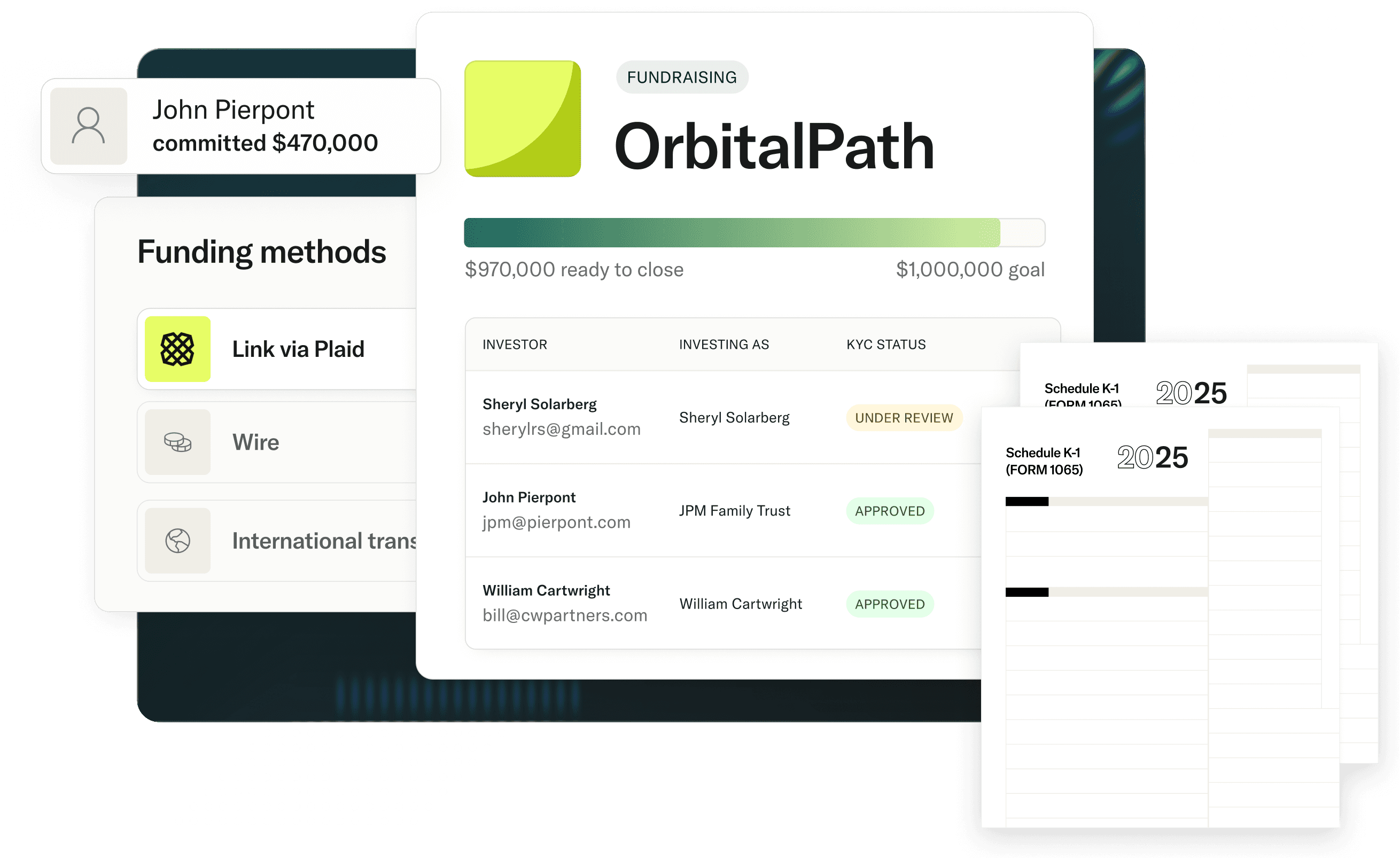
Onboard investors: Onboard investors digitally to verify accreditation, complete KYC, and collect signatures in one flow.
Close and fund: Send wire instructions, collect capital, and fund the SPV.
Additional closes: If allocation increases or new investors join, run additional closes in the same vehicle.
Ongoing administration: Eliminate back-office overhead with automated Schedule K-1 (K-1) tax documents and LP reporting.
You can run all of this on Sydecar. Fast entity formation and deal review help you secure your allocation while the round is still open. Digital onboarding gets investors signed and funded quickly, and support for additional closes lets you keep bringing investors in to grow your allocation. Embedded compliance and KYC handle regulatory requirements without a dedicated operations team. Automated K-1 delivery gets your investors their tax documents on time. Transparent, flat pricing keeps your economics predictable and easy to explain to LPs.
Frequently Asked Questions
Can I exercise my pro-rata rights through an SPV instead of my fund?
Yes. When your fund does not have reserves for the follow-on, or the round falls outside your fund's mandate, an SPV lets you exercise your pro-rata rights with outside capital and keep your position in the deal.
Can I add investors after the first close?
Yes. Sydecar's Additional Closes feature lets you bring new LPs into the same SPV or accept larger commitments after the initial close.
When do LPs receive K-1 tax documents?
For a calendar-year SPV, LPs generally receive their K-1s by the March 15 filing deadline. On an automated platform, the system generates and distributes K-1s for you, with no manual filing work.
Do I need my own operations team to run an SPV?
No. A modern SPV platform handles entity formation, compliance, and tax reporting, so solo managers and lean teams can run deals without dedicated back-office staff.