At a Glance
Secondary transactions allow investors to buy or sell startup equity before a traditional exit, creating liquidity in an otherwise illiquid asset class.
The secondary market now spans direct company secondaries, fund secondaries, and continuation vehicles, and has become a core part of venture liquidity strategy.
These transactions can benefit both buyers and sellers, enabling VCs to recycle capital and LPs to exit early or rebalance portfolios.
SPVs make secondary deals more accessible by aggregating investors and streamlining ownership transfers into a single vehicle.
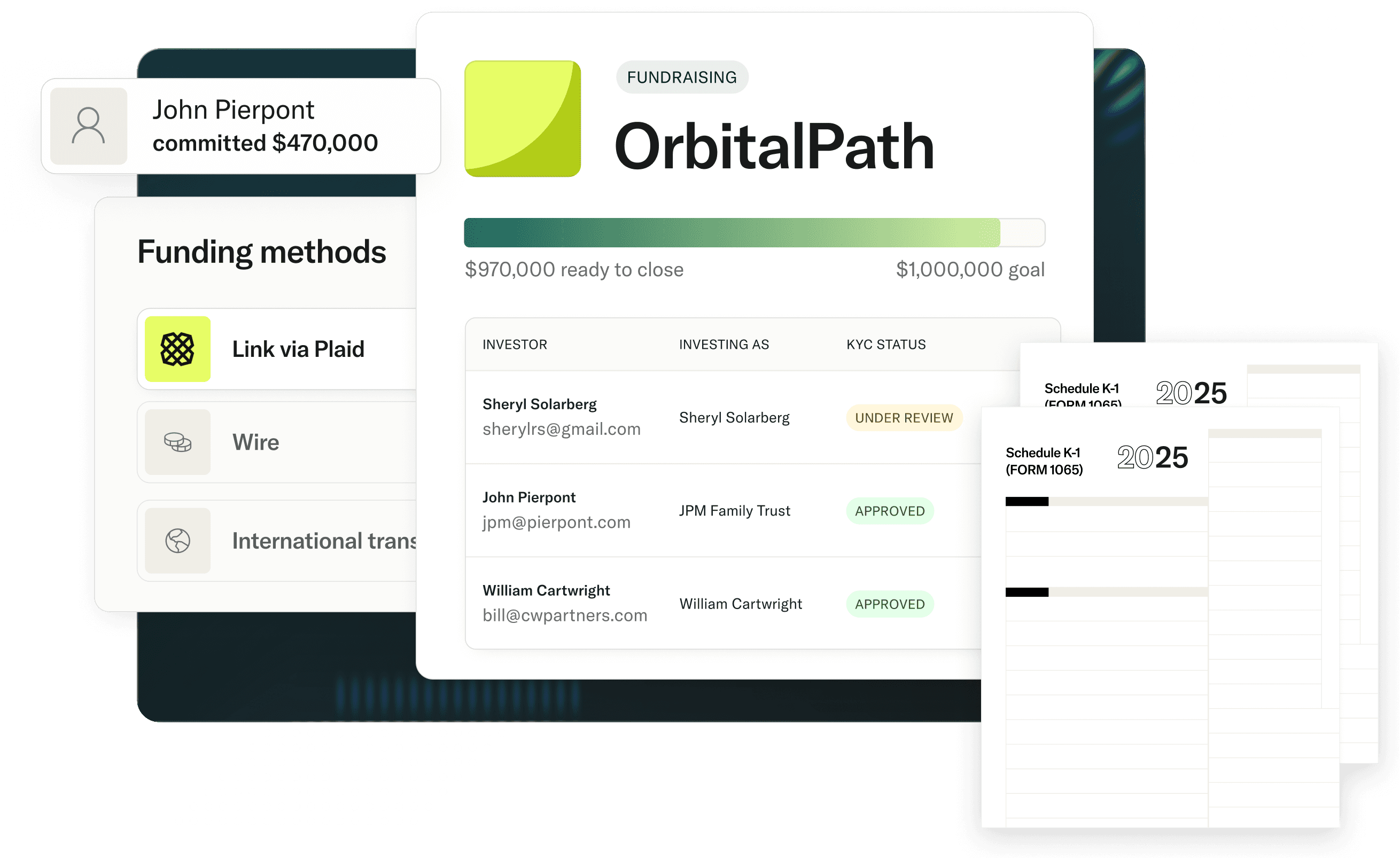
Sydecar supports secondary transactions end-to-end by automating banking, compliance, contracts, and reporting so managers can execute structured deals at scale.
What Is a Secondary Transaction?
Venture capital is inherently illiquid. Investments in private companies, whether held directly or through funds, are often tied up for many years, until an IPO, acquisition, or other exit event.
A secondary transaction is any sale of existing ownership in a private company or fund where the seller is someone other than the company itself. Examples include:
A seed investor selling part of their position to another investor before an exit.
An LP in a venture fund selling their fund interest to another LP or a secondary fund.
Secondary transactions provide investors with liquidity or the ability to reallocate capital without waiting for a full company exit.
The distinction from a primary investment is straightforward. A primary investment buys newly issued shares directly from the company, and the company receives the proceeds. A secondary transaction transfers existing shares from one holder to another, and the company receives no proceeds. Ownership changes hands. The company’s outstanding share count does not.
How the Secondary Market Has Evolved
Historically, secondaries were a niche, sometimes stigmatized part of private markets. Sellers worried that selling signaled a lack of confidence; buyers had limited data, and companies were wary of cap table churn.
Several cycles have changed that:
After the 2008 financial crisis, many LPs faced liquidity needs and began selling fund positions, fueling growth in dedicated secondary funds.
In 2020–2022, large late-stage rounds, high valuations, and extended time to IPOs led to more investors exploring secondaries as a way to manage risk and liquidity.
With slower IPO and M&A markets and longer holding periods, secondary transactions have become a mainstream tool for both portfolio management and access to high-quality private assets.
Today, secondaries are a core part of the private markets toolkit.
Types of Secondary Transactions
Secondary activity generally falls into two broad categories: company (direct) secondaries and fund secondaries.
Direct Secondaries
In a direct secondary, the underlying asset is equity in a specific company (common or preferred stock). The seller might be:
A founder or early employee
An early-stage investor
Another shareholder looking to reduce or rebalance exposure
Large private companies often have restrictions on share transfers, such as rights of first refusal, company consents, and limitations on transaction volume. These constraints can make direct secondaries complex to execute.
SPVs can help:
Aggregate buyers into a single entity on the cap table.
Simplify negotiations for the company by dealing with one buyer vehicle instead of many.
Facilitate structured ownership transfers, including later syndication of interests in the SPV itself.
Fund Secondaries
Fund secondaries involve the sale of interests in a private fund rather than in a single company. Three structures are common:
LP-Led Secondaries
An existing LP in a fund sells all or part of their fund interest to another investor. This can:
Provide liquidity to LPs who want or need to exit early.
Allow new LPs (or secondary funds) to gain exposure to a more mature portfolio.
Buyers often include other LPs, fund-of-funds, or specialized secondary funds.
GP-Led Secondaries
In a GP-led secondary, the fund manager initiates the transaction. Common patterns include:
Selling a subset of portfolio positions to a secondary buyer.
Structuring a transaction that provides liquidity to existing LPs while maintaining active management of selected assets.
This can create liquidity when a fund is reaching the end of its term but still holds meaningful positions.
Continuation Vehicles
A continuation vehicle is a new fund or SPV formed to hold one or more existing portfolio companies that still have upside potential after the original fund’s term.
Key features:
Existing LPs may have the option to roll their interest into the continuation vehicle or sell for liquidity.
New investors can participate to gain exposure to a concentrated, later-stage portfolio.
Continuation vehicles have become a significant part of the secondary market and are expected to remain central as funds look for ways to manage long-duration assets.
Why Secondaries Matter
Secondary transactions offer benefits for both sellers and buyers.
Benefits for Sellers
Liquidity: Convert paper gains or long-dated positions into cash without waiting for a company exit.
Portfolio Management: Rebalance exposures across companies, sectors, or stages.
Capital Recycling: GPs can use secondary proceeds to reinvest into new opportunities, potentially improving fund metrics and supporting future fundraising.
Employee Retention: Partial cash-outs let founders and early employees realize some gains while staying with the company.
For LPs, secondaries can:
Provide early exits from longer-dated funds.
Help manage overall portfolio liquidity and risk.
Benefits for Buyers
Buyers use secondaries to:
Access later-stage opportunities: Gain exposure to more mature companies or portfolios, often closer to potential liquidity events.
Diversify: Acquire stakes in companies or funds they did not have the chance to back at the primary stage.
Price risk differently: Secondary pricing can reflect updated information about company performance and market conditions.
Reduce J-curve exposure: Buying into a more mature company can soften the "J-curve", the early-years dip in returns common to early-stage investments and new funds before their investments appreciate.
Secondaries can be especially attractive for newer investors, family offices, and fund-of-funds who want exposure to high-quality private assets but may not have primary allocation access.
The Role of SPVs in Secondary Transactions
SPVs are an important tool for structuring secondary deals:
For direct secondaries: An SPV can purchase shares from selling shareholders and sit as a single line on the cap table, simplifying administration for the company.
For fund secondaries or continuation vehicles: SPVs can aggregate investors who want exposure to a specific subset of assets or a specific secondary transaction.
Benefits of using SPVs include:
Consolidated ownership on company or fund ledgers.
Clear economic terms, including management fees and carry, tailored to the secondary opportunity.
Scalable, repeatable structures for managers who plan to execute multiple secondary deals over time.
How a Secondary SPV Comes Together
Running a secondary through an SPV generally follows a path:
Source the shares. Identify a willing seller and confirm the company permits the transfer.
Negotiate terms. Agree on price, any waiver of a right of first refusal, and information rights. A right of first refusal (ROFR) lets the company or its existing investors match an offer before shares transfer to an outside buyer.
Form the vehicle. Establish the SPV, most often a Delaware LLC, to hold the shares.
Collect commitments. Onboard investors, complete KYC and AML checks, and execute subscription agreements.
Close. Move capital, execute the transfer documents, and update the cap table.
Deliver tax documentation. Deliver Schedule K-1 tax documents each year and manage distributions at exit.
What to Weigh Before Executing a Secondary
A few factors deserve attention before a secondary closes:
Company approval. Many private companies restrict share transfers. Confirm approval and clear any rights of first refusal early in the process.
Pricing. Without a recent primary round to set a mark, valuation may rely on a 409A appraisal, the company’s official fair market value set for tax purposes, or a negotiated discount.
Information access. Secondary buyers sometimes receive limited financial information, which can constrain diligence.
Institutional comfort. Some LPs and company counsel remain cautious about secondaries. A clean, well-documented process eases those concerns.
Eligibility and tax. Secondary SPV investors typically face the same accredited investor requirements as a primary deal. Tax outcomes depend on holding period and structure, so managers often review the details with qualified tax counsel before closing.
How Sydecar Supports Secondary Transactions
Secondary transactions can be operationally and legally complex, especially when multiple investors, entities, and approvals are involved.
Sydecar makes it simple and efficient for venture fund and syndicate managers to form SPVs and funds by automating banking, compliance, contracts, and reporting. For secondary deals, Sydecar’s platform helps you:
Form secondary SPVs quickly with standardized documentation and workflows.
Onboard investors through a streamlined subscription and KYC process.
Handle banking and settlements for purchase and sale transactions.
Manage ongoing reporting and tax, including Schedule K-1s.
This infrastructure allows managers to focus on sourcing and structuring secondary opportunities, while Sydecar manages the transaction layer and ongoing administration.
Key Takeaways for Emerging Managers
When evaluating or structuring secondary transactions, consider:
Objective: Are you seeking liquidity, portfolio rebalancing, access, or a combination?
Structure: Is a direct secondary approach, fund secondary, or continuation vehicle most appropriate?
Stakeholders: How will the transaction impact existing LPs, company stakeholders, and future fundraising?
Economics: Are pricing, fees, and carry aligned with the value and risk of the opportunity?
Operations: Do you have the right infrastructure to execute the deal cleanly and support it over time?
For managers and investors, secondaries are no longer a fringe strategy; they are a central tool for managing portfolios and accessing high-quality private assets. With the right structure and platform, they can be executed efficiently and at scale.
If you want to learn more about how Sydecar supports secondary SPVs, check out our Secondaries page.