At a Glance
Many startup offerings require accredited investor status.
Many angels set a total budget, then split it across small checks.
Angel returns tend to concentrate in a few wins, so spreading money across many companies matters.
Special purpose vehicles (SPVs) pool small checks, giving new angels access to more deals.
Angels with more deals than money can become SPV leads.
Who Can Become an Angel Investor?
An angel investor is an individual who invests personal capital in early-stage startups. Many private offerings limit participation to accredited investors. Non-accredited investors can use Regulation Crowdfunding (Reg CF).
What Accreditation Means in Practice
The Securities and Exchange Commission (SEC) lists three common paths for individuals:
Income: over $200,000, or $300,000 with a spouse or partner, for the prior two years, and reasonably expects the same this year.
Net worth: over $1 million, excluding your primary residence.
Credentials: a Series 7, 65, or 82 license in good standing.
Skills and Time You Need
Diligence, the research you do before investing, is learnable. Many angels spend several hours per deal. Founders value hiring help and introductions, which can win allocation, meaning a spot in the funding round.
How Much Money Do You Need to Start?
Check size is the amount you invest in one company. Portfolio budget is the total you deploy across all deals.
A set budget keeps one exciting pitch from using up capital meant for 20 companies. Many angels invest only money they can lock up and afford to lose.
Check Sizes and Portfolio Math
The 2024 Angel Funders Report tracks investment activity among angel groups. Angel investments can lose value or return nothing, while others generate returns through an exit, such as a company sale. Spreading capital across companies can help manage that risk, though it does not guarantee a return.
Five $50,000 checks give you five chances at a big winner.
Twenty $12,500 checks deploy the same $250,000 with four times the chances.
Many early-stage businesses fail to return the initial investment. Diversification, or spreading money across many companies, is the standard response. A common practitioner guideline is about 20 companies, trading time for breadth.
Risk, Illiquidity, and Realistic Returns
Early-stage companies often fail, and exits often take many years. Private shares are often illiquid, and resale may be restricted. Illiquid means hard to sell. Angel investing produces no monthly income.
Where Do New Angels Find Deals?
Deal flow is the stream of investment opportunities you see. The five main sources:
Founder networks: operators and former colleagues.
Angel groups: members screen deals together.
Syndicates: an SPV lead invites limited partners (LPs), the investors in an SPV, to join a deal.
Scout programs: venture firms fund scouts to invest for them.
Online platforms: listings for accredited investors or those using Reg CF.
Personal networks offer early access with less screening. Groups and syndicates add screening and fees.
Evaluating a Startup
Work through four lenses in order:
Team: Can these founders recruit, sell, and adapt?
Market: Is the market big enough for a very large outcome?
Product: Do customers show real demand?
Terms: Do the price and investor rights fit the risk?
A decision log, a simple record of why you invested or passed, sharpens judgment over time.
Should You Invest Directly or Through an SPV?
An SPV is a legal entity that pools money from many investors into one company. An SPV lead or SPV manager organizes and manages it.
Direct checks build a personal relationship with the founder. A deal-by-deal approach through SPVs lowers minimums in exchange for fees and less control.
Direct Investing vs. SPV: Side-by-Side
Factor | Direct | SPV |
|---|---|---|
Minimum check | Often higher | Often lower |
Fees and carry | None | Carry and admin costs |
Information rights | You negotiate them | The SPV holds them |
Cap table impact | One line per angel | One line total |
Admin burden | Yours | SPV manager handles it |
Carry is the share of profits the SPV lead earns. The cap table is the company's list of owners.
How Founders and Co-Investors View SPVs
Founders: many SPV managers find founders welcome an SPV because it adds one owner to the cap table instead of many.
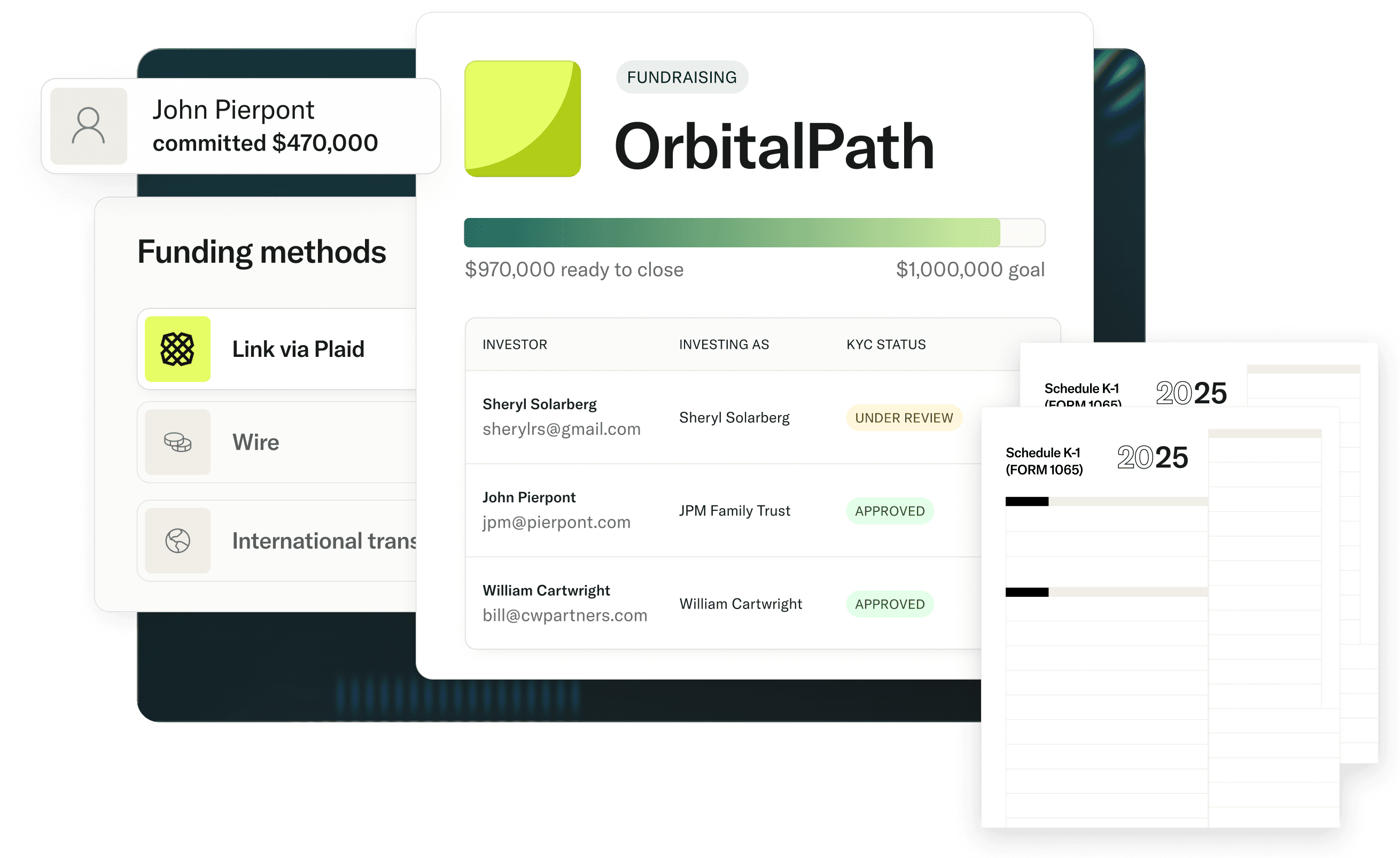
LPs: some grow skeptical after unclear fees or slow Schedule K-1 (K-1) tax forms.
What decides it: the quality of the SPV manager.
What Happens After You Invest?
After the deal closes, three items need attention:
Updates: founders send periodic progress reports.
Follow-ons: pro rata rights let you invest more in later rounds to keep your ownership share. Each follow-on also puts more of your money into one company.
K-1s: SPV investors receive a K-1 each year. If one is late, Form 4868 lets individuals request up to six more months to file, with payment still due on time.
From Angel to Deal Lead
When you find deals that are larger than what you can afford with your personal capital, leading an SPV lets you pool capital from multiple investors and earn carry. It also adds formation, compliance, and tax work.
FAQ
Do You Pay Back Angel Investors?
Founders do not repay angel investments on a schedule. Angels earn returns only through an acquisition, an initial public offering (IPO), or a share sale.
Can I Angel Invest Through My Individual Retirement Account (IRA)?
Some self-directed IRA custodians allow private placement securities. Regulators flag higher fees and complex tax rules. The Internal Revenue Service (IRS) lists prohibited transactions involving disqualified persons, a defined group of people and entities tied to the account.
How Does Reg CF Work for Non-Accredited Investors?
Reg CF has three core features:
Intermediary: companies raise capital online through an SEC-registered broker-dealer or funding portal.
Limits: non-accredited investors face 12-month limits based on income and net worth.
Resale: shares are generally restricted for one year.
What Is Qualified Small Business Stock (QSBS)?
Section 1202 can let holders other than corporations exclude some or all of their gain on QSBS. For stock acquired after July 4, 2025, the exclusion depends on how long you hold it:
Three years: 50%.
Four years: 75%.
Five years or more: 100%.
Rules on C-corporation status, company assets, and stock held through an SPV also apply.
What Is the Difference Between an Angel Group and a Syndicate?
An angel group is a membership club whose members screen deals and invest individually. A syndicate centers on one SPV lead who pools LP money for each deal.syndicate centers on one SPV lead who pools LP money for each deal.
What Fees Do SPVs Typically Charge?
Carry is traditionally 20%, and the average on Sydecar SPVs is 12%. SPVs may also pass setup and administration costs to investors.