At a Glance
A donor gives money with no ownership, repayment, or return.
An angel investor trades personal capital for equity or future equity.
"Angel donor" mixes up the two terms.
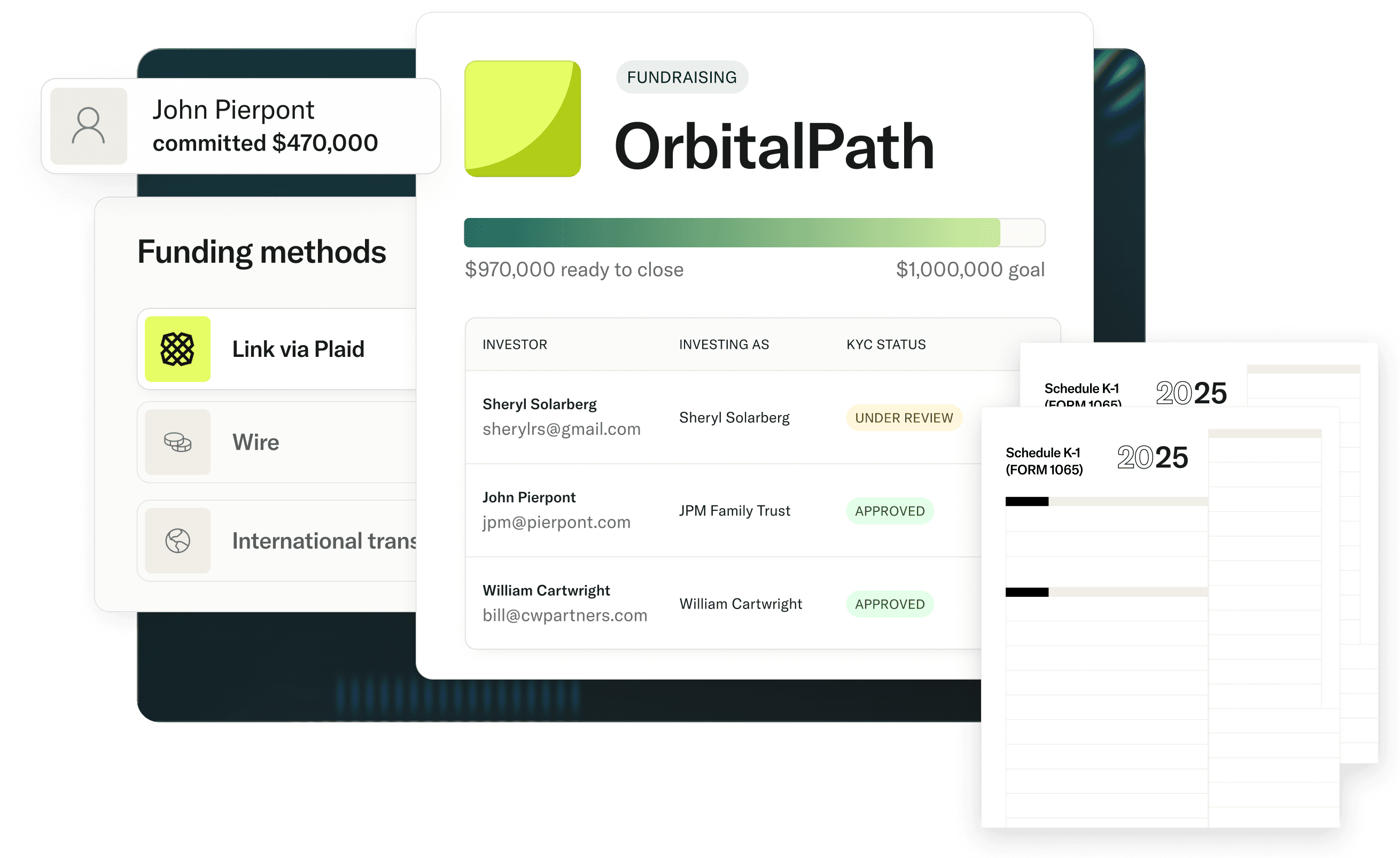
Many angels pool capital through a Special Purpose Vehicle (SPV), an entity built to invest in one deal.
Founders, limited partners (LPs), and co-investors judge structures by ownership records, tax forms, and reporting.
What Is an Angel Investor?
An angel investor is a person who invests personal capital in early-stage startups in exchange for equity or the right to future equity. Many angels are accredited investors, meaning they meet certain income, net worth, or other qualifying criteria.
Angel checks often arrive before revenue and can feel like gifts, hence the term "angel donor." They still carry legal rights.
How Angels Structure Their Checks
Common startup securities include:
Priced equity: The angel buys shares at a set company value.
Simple Agreement for Future Equity (SAFE): A contract promising future shares after a set event, such as a later funding round.
Convertible note: A loan that can turn into shares, often at the next funding round.
Equity gives clear ownership today. SAFEs and notes delay setting a company value, so the final stake stays unknown.
Who Can Be an Angel Investor?
Many private offerings limit participation to accredited investors. The Securities and Exchange Commission (SEC) sets income and net worth thresholds that define this group. These rules shape many deals:
SPV leads often take steps to confirm each investor's status.
Some friends or family may not qualify.
What Is a Donor, and How Does a Donation Differ From an Investment?
A donor gives money with no ownership stake or repayment. Nonprofits, the usual recipients, have no shareholders.
Four differences stand out:
Return: A donor expects nothing back. An angel expects a share of any exit, such as a company sale.
Control: A donor has no legal rights. An angel may hold voting or information rights.
Tax treatment: Gifts to qualified charities may be deductible. Angel gains and losses follow capital gains and loss rules.
Reporting: A donor gets a receipt. An SPV investor gets a Schedule K-1 (K-1), a yearly tax form.
Many people find it helpful to decide upfront: impact or financial return.
Donor vs. Solo Angel vs. SPV: How Do They Compare?
A special purpose vehicle is one entity that holds a single investment for a group of LPs.
Factor | Donor | Solo Angel | SPV Investor |
|---|---|---|---|
Ownership | None | Shares or SAFE | Interest in the SPV |
Expected return | None | Share of exit | Exit share, minus fees and the SPV lead's cut |
Minimum check | Any amount | Set by founder | Set by SPV lead, often smaller |
Paperwork | Receipt | Signs every document | SPV lead handles documents |
Investor experience | No financial reporting | Self-managed records | Central reporting and K-1 |
When Pooling Capital Through an SPV Makes Sense
An SPV combines many smaller checks into one line on the cap table, the list of company owners. The SPV lead finds the deal and may earn carried interest, a share of profits.
Pooling makes sense when:
The founder's minimum exceeds any single angel's check.
Several angels want into the same round.
The SPV lead wants a track record before raising a fund.
The tradeoff: each SPV adds formation fees, KYC identity checks, and tax filings.
How Founders and LPs View Each Structure
Market acceptance depends on the audience:
Founders: Founders often prefer one line--the SPV--on a cap table.
LPs: LPs expect timely K-1 forms and clear balance statements.
Co-investors: Co-investors read professional reporting as a sign of a serious SPV lead.
What Are the Risks and Drawbacks of Angel Investing?
Angel investing risk means losing money or waiting years. Each risk calls for a decision:
Illiquidity: Private startup shares are often hard to resell. Decide how much capital can stay locked up.
High failure rates: Startup outcomes are uncertain, and some companies lose all value. Decide how widely to diversify.
Dilution: New shares in later rounds shrink each stake. Decide whether pro rata rights shrink each stake. Decide whether pro rata rights (the right to buy more later) matter.
Long holding periods: An exit may take years. Decide whether that timeline fits.
How Sydecar Supports Angels Who Invest Together
Sydecar is a platform offering SPV administration to SPV leads and syndicate leads:
Fast deal setup: Sydecar reviews SPVs within 4 hours of submission.
Dedicated support: A Deal Operations Associate supports each deal.
Transparent pricing: Pay a one-time fee of 2% of capital raised, ranging from $4,500 to $14,500, with no annual fees.
Clear K-1 timelines: SPV leads can see each investor’s K-1 delivery timeline.
Flexible investor structures: Sydecar supports self-directed individual retirement accounts (IRAs) and other non-standard entities.
FAQ
Do Angel Investors Get Paid Back?
Angels usually earn returns at an exit, such as an acquisition or public offering. If a note never converts, its terms may allow repayment at the maturity date.
Can a Donation Later Convert Into Equity?
A gift carries no ownership, so it cannot convert on its own. Equity requires a separate investment with signed documents.
Can Angels Invest Through a Retirement Account?
Some angels invest through a self-directed IRA. The custodian signs the documents, and the account owns the interest. Federal prohibited transaction rules limit deals with the owner's family and other related parties.
What Happens if the Startup Fails?
The shares may become worthless, and the SPV winds down. Investors receive a K-1 that reflects their share of the loss, subject to tax limits.
Is There a Tax Benefit for Angel Gains?
Some startup shares may count as qualified small business stock (QSBS) under qualified small business stock (QSBS) under Section 1202 of the tax code, which may reduce federal tax on gains. Eligibility depends on the company, holding period, and other tests.