At a Glance
Syndicate investor management software runs the back office for a special purpose vehicle (SPV), a legal entity that pools many investors into one deal.
The best software onboards investors, collects money, and handles taxes for years after close.
Syndicate leads choose among SPV-specific platforms, general fund software (built for a fund, one pool that invests in many companies), and manual tools.
Limited partners (LPs), counsel (the lawyers on a deal), and founders must trust the process.
What Is Syndicate Investor Management Software?
Syndicate investor management software forms SPVs and manages every investor in them. Syndicate leads and SPV managers use it as their back office.
The Jobs It Has to Do Across a Deal
Before launch: form the SPV, prepare documents, and set fees.
At close: onboard investors, collect signatures, and track wires (bank transfers).
After close: deliver tax forms, send updates, and handle distributions (payouts to investors).
Why Spreadsheets Break Down
A spreadsheet works for a handful of deals with a small number of investors. It strains when a lead runs, for example, 15 deals a year with dozens of investors each. Mistakes can compile, such as missed wires surfacing close to the funding deadline. Tax season also means rebuilding each investor's history by hand.
Which Features Matter Most?
Must-have features make closing and tax season easier.
Investor Onboarding and Capital Collection
Identity checks: Know Your Customer (KYC) and Anti-Money Laundering (AML) screening confirm who investors are and where their money comes from.
Accreditation verification: confirms each investor is accredited, meaning they meet the income or wealth tests for private deals.
E-signatures: investors sign the agreement to invest online.
Per-investor funding status: shows who has wired, ending email chasing.
Tax, Reporting, and Ongoing Administration
Schedule K-1 (K-1) delivery: this Internal Revenue Service (IRS) form shows each investor's share of income or loss.
Distributions: the platform calculates and sends payouts when a company exits.
Ongoing filings: annual returns and entity upkeep continue for the life of the SPV.
SPV-Specific Platforms vs. General Fund Software vs. Manual Tools
Each approach trades off speed, cost, and fit for complex deals.
Factor | SPV-specific platform | General fund software | Manual tools |
|---|---|---|---|
Speed | Fast, standard workflows | Moderate | Slow, email-driven |
Cost | Often per deal | Often annual fees | Usually legal fees per deal |
Investor experience | One online flow | Built for fund LPs | Email and PDFs |
Complex deals | Multiple closes (several funding dates), side letters (custom terms for one investor) | Weaker on one-off vehicles | Custom, costly |
SPV-specific platforms standardize documents and steps. The tradeoff is less room for unusual terms.
General fund software tracks a fund. The tradeoff is paying for unused features.
Manual tools (spreadsheets, email, and outside counsel) offer full control. The tradeoff is time: the lead becomes the back office.
When Each Approach Makes Sense
First-time syndicate lead: an SPV-specific platform removes setup work.
Repeat SPV manager: an SPV-specific platform keeps every deal on one system.
Fund manager with co-investments: many pair fund software with an SPV platform for these extra deals made alongside the fund.
How to Evaluate a Platform Beyond the Feature List
Most platforms list similar features, so these factors decide outcomes.
Pricing model: one-time or annual.
Close speed: how quickly the team reviews a new SPV.
Support: real people answering during close week.
LP privacy: who can see your investor list.
Market Acceptance and Investor Comfort
LPs want simple signing, and some distrust platforms that run deal marketplaces or market deals to them.
Counsel prefers standard documents that are quick to review.
Founders worry about messy cap tables (the record of who owns the company), and an SPV appears as one line.
Red Flags to Watch For
Pricing shown only after a sales call
Recurring fees that grow with each SPV
A deal marketplace that exposes your LPs
Bot-only support at close
How Sydecar Supports Syndicate Managers
Sydecar is built solely for SPVs and handles formation, administration, and LP management in-house for the life of each vehicle.
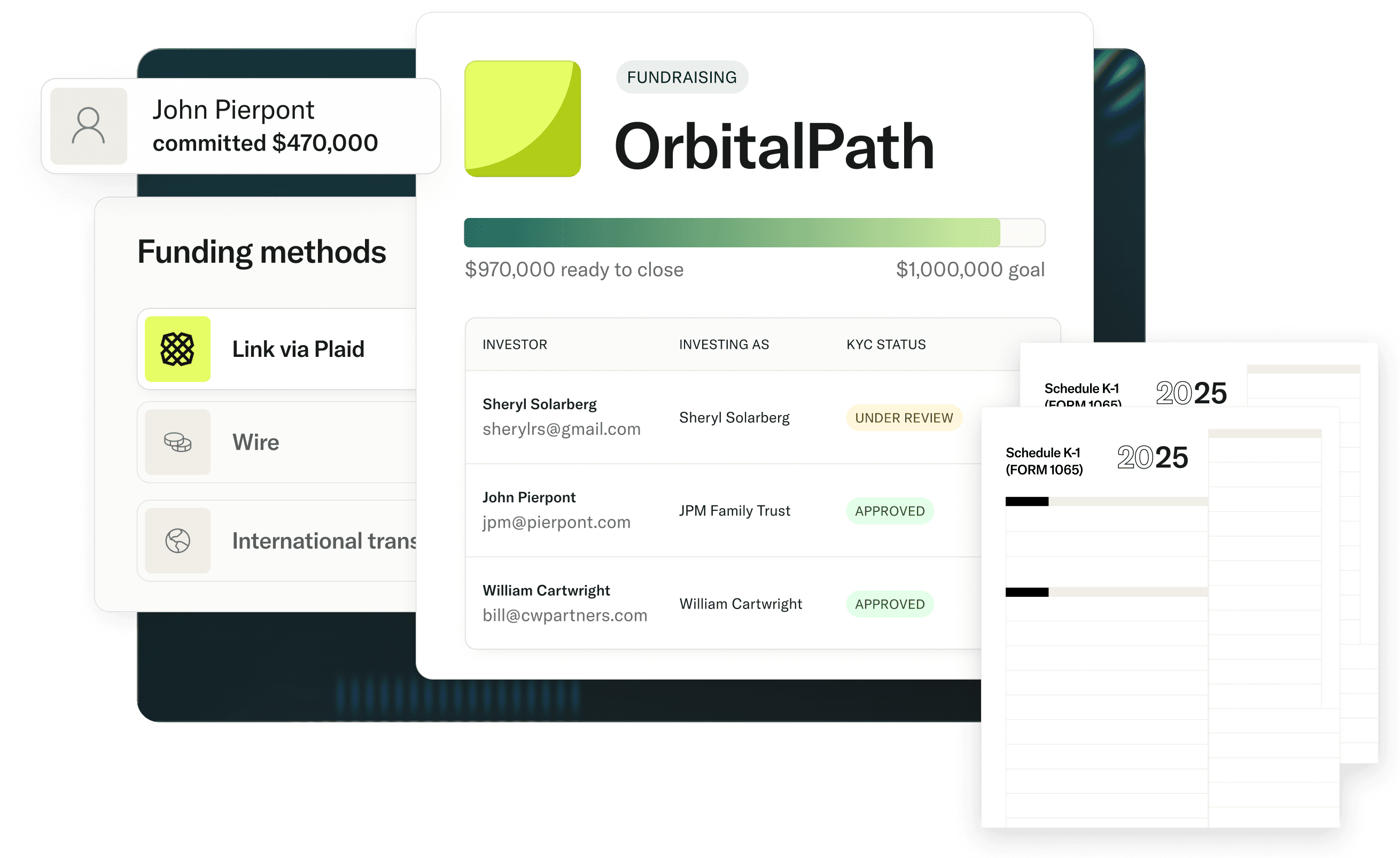
Spreadsheet chaos: Manage every SPV and LP from one dashboard, with built-in contact management and investor communication tools. Sydecar handles formation and ongoing administration in-house.
Wire chasing: See each investor’s KYC and funding status in one place, so you know who has funded and who still needs to act.
Repeat onboarding: LPs keep a verified profile from deal to deal, so returning investors review terms, sign, and wire.
K-1 frustration: See K-1 timelines for each investor in the platform. Sydecar prepares taxes and delivers K-1s digitally.
Slow closes: Sydecar reviews SPVs within four hours of submission and responds to questions in under three hours on average. A real person who knows your deal handles every request.
Hidden pricing: Sydecar charges one-time pricing published up front, with no recurring annual fees. See what SPVs cost for a full breakdown.
LP privacy: Sydecar is SOC 2 Type 2 certified, runs no deal marketplace, never shares LP data with other managers, and never markets its platform or services to your LPs.
Frequently Asked Questions
Can I Run SPVs Alongside a Fund?
Many emerging managers use SPVs for co-investments and deals too large for the fund. Each SPV is its own entity, keeping investor groups and fees separate.
Can Investors Outside the United States (US) Join a Syndicate?
Many SPVs accept investors from outside the US. Individuals usually submit IRS Form W-8BEN, a tax form that confirms they are not US taxpayers. Entities, such as companies or trusts, use Form W-8BEN-E instead.
What Is Carried Interest in a Syndicate?
Carried interest (carry) is the share of profits the syndicate lead earns. The lead earns carry after investors recover their original investment, and terms vary by deal.