At a Glance
Limited partner (LP) onboarding covers identity checks, accreditation, subscription documents, funding, and tax forms.
Each new special purpose vehicle (SPV), a legal entity formed for one deal, repeats the onboarding process, so manual work adds up.
Software can automate routine onboarding steps, while people review issues that need attention, such as flagged identity checks.
SPV leads choose between stitched-together tools and one SPV platform.
LPs and counsel (lawyers) judge consistency, security, and the audit trail, a record of who did what and when.
What Is LP Onboarding for an SPV Deal?
LP onboarding is the process of verifying, documenting, and funding each investor before an SPV closes, which finalizes the deal and triggers investment. It starts at commitment and ends when the wire arrives.
Which Onboarding Steps Can Be Automated?
Software can automate each step below, but flagged Know Your Customer (KYC) and Anti-Money Laundering (AML) checks still require human review.
Identity, KYC, and AML Checks
KYC checks confirm who an investor is. AML screening checks names against sanctions lists, which are government lists of people barred from doing business, and other watch lists.
Software verifies photo IDs and screens individuals.
Entity investors, such as trusts or companies, need Know Your Business (KYB) checks on beneficial owners, the people who own or control the entity.
A person reviews any flagged results.
Accreditation and Subscription Documents
Accreditation confirms an investor meets the Securities and Exchange Commission (SEC) accredited investor definition, which sets income or net worth levels for joining private deals.
Self-certification, where investors confirm their own status, is fast. Third-party verification takes more paperwork.
Pre-filled subscription documents, the agreement each investor signs to join, pull from the investor profile.
E-signature collects every signature in one flow.
The decision: Regulation D provides two common exemptions for private offerings: Rule 506(b) and Rule 506(c). Rule 506(b) prohibits general solicitation, or publicly advertising the offering. Issuers must have a reasonable belief that investors are accredited, but may also accept up to 35 non-accredited investors who meet certain financial sophistication requirements. Investor self-certification may support that belief. Rule 506(c) permits general solicitation, but requires issuers to take reasonable steps to verify that all investors are accredited. Self-certification alone does not satisfy this verification requirement. Consult counsel when choosing an exemption and determining how to verify investor eligibility.
Funding and Tax Forms
Funding moves committed capital, the money each investor promised, into the SPV's bank account. Tax forms establish each investor's tax status.
Wire matching ties each incoming wire to an investor and amount.
Automated reminders follow up with unfunded investors.
United States (US) persons submit a Form W-9. Non-US individuals typically submit a Form W-8BEN.
The consequence: missing or incorrect W-9 or W-8 forms can create withholding and tax-reporting problems later.
How to Set Up an Automated LP Onboarding Workflow
Standardize documents. One template set keeps terms consistent across deals.
Choose a system of record. Keep investor data, status, and documents in one main system.
Reuse LP profiles across deals. Returning investors confirm saved details.
Track close readiness. Monitor who has passed KYC, signed, and funded.
Setup effort pays off on every later deal.
Building Your Own Stack vs. Using an SPV Platform
A build-your-own stack links separate tools for e-signature, KYC, banking, and tracking. An SPV platform runs everything in one system.
Factor | Build Your Own Stack | SPV Platform |
|---|---|---|
Cost | Several subscriptions plus time | One fee per SPV |
Speed | Handoffs between tools | One investor flow |
Error risk | Manual re-entry between systems | Data entered once |
Audit trail | Spread across vendors | Kept in one record |
Control | Full choice of vendors | Platform's standard process |
A custom stack suits teams with operations staff. A platform suits lean teams running repeat deals.
What LPs and Counsel Expect
LPs, counsel, and administrators expect consistent documents, secure data, and a clear audit trail.
Some LPs hesitate to enter personal data into an unfamiliar portal.
Counsel may ask how the process records KYC decisions.
Administrators want clean tax data.
Common Pitfalls and How to Avoid Them
Incomplete entity documentation: Trusts and limited liability companies (LLCs) stall without ownership details. A document list up front helps.
International LP requirements: Non-US investors may face extra KYC steps, so starting early helps.
Wire mismatches: Wrong amounts or missing references delay reconciliation, the work of matching each wire to the right investor. Unique wire references, a code the investor adds to the wire, help.
Re-collecting data for repeat LPs: Repeated requests frustrate investors. Saved profiles help.
Automate LP Onboarding With Sydecar
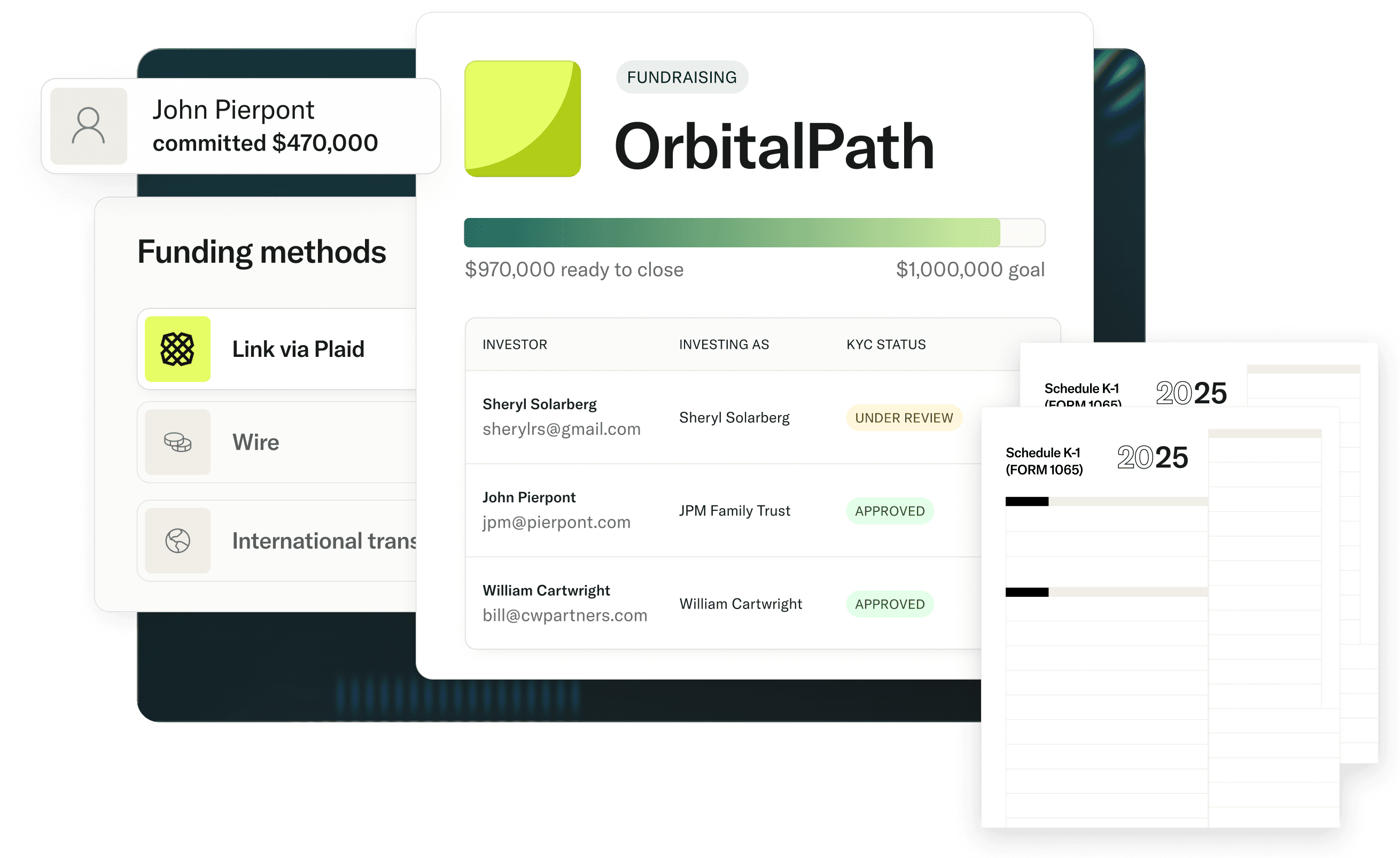
Sydecar, built solely for SPVs, automates each onboarding step above, from the first invitation to the final K-1.
Invitations and profiles: Share as many invitation links as you need for each deal. New investors upload a photo ID, and Sydecar fills in their profile details from it.
KYC, KYB, and AML: Checks run inside the investor flow. When Sydecar needs more information, the platform tells each investor exactly which documents to submit. Investors can sign before review finishes and fund once compliance checks clear.
Entity investors: The onboarding page lists required documents by investor type, including beneficial ownership details, and you can share an entity onboarding guide with LPs in advance. About a third of LPs who invest with independent venture managers on Sydecar invest through an entity, most often an LLC or trust.
Accreditation and e-signature: Investors confirm accreditation and sign standardized subscription documents in the same flow.
Repeat LPs: Investors keep a verified profile from deal to deal. Sydecar reruns KYC only when key identity information changes, so returning LPs review terms, sign, and wire. 45% of LPs who invest with independent venture managers on Sydecar have backed more than one deal with the same manager.
Funding visibility: Each SPV gets a dedicated bank account through Sydecar’s integrated banking partners. You see each investor’s KYC and funding status in one place, so you know whom to follow up with before the deadline.
Tax documents: Investors enter their tax details during onboarding. After the close, Sydecar prepares taxes and delivers Schedule K-1s digitally. A K-1 is the tax form showing each investor’s share of the SPV’s income and losses.
Privacy and security: Sydecar is SOC 2 Type II certified, never shares LP data with other managers, and never markets its platform or services to your LPs.
FAQ
How Long Does LP Onboarding Take?
Timing depends mostly on how fast investors respond. Individuals with documents ready can often finish in minutes.
What Happens if an LP Fails a KYC Check?
The investor typically cannot fund until the issue resolves. Some flags stem from image quality or name mismatches and clear on resubmission. A confirmed sanctions match typically ends participation.
Can Entity LPs Invest Through an SPV?
Trusts, LLCs, partnerships, and family offices (firms that manage one family's wealth) can invest. Depending on structure, they may qualify through their own assets or their owners.
How Is LP Data Protected During Onboarding?
Managers tend to care about encryption, independent SOC 2 audits, and data-sharing policies. Some also ask whether the provider markets deals to investors.