At a Glance
A special purpose vehicle (SPV) provider handles entity formation, compliance, banking, investor onboarding, and tax documents so you can focus on deals.
Evaluate providers on speed, compliance coverage, and pricing transparency.
SPVs work best for single-asset opportunities. Committed-capital funds suit a portfolio strategy.
Your provider's approach to investor privacy directly affects your ability to build a durable limited partner (LP) base.
The right platform scales from your first co-investment to a multi-vehicle practice.
What Does an SPV Provider Do?
An SPV provider handles the legal, financial, and regulatory work required to pool investor capital into a single entity for one deal.
Services Included in SPV Administration
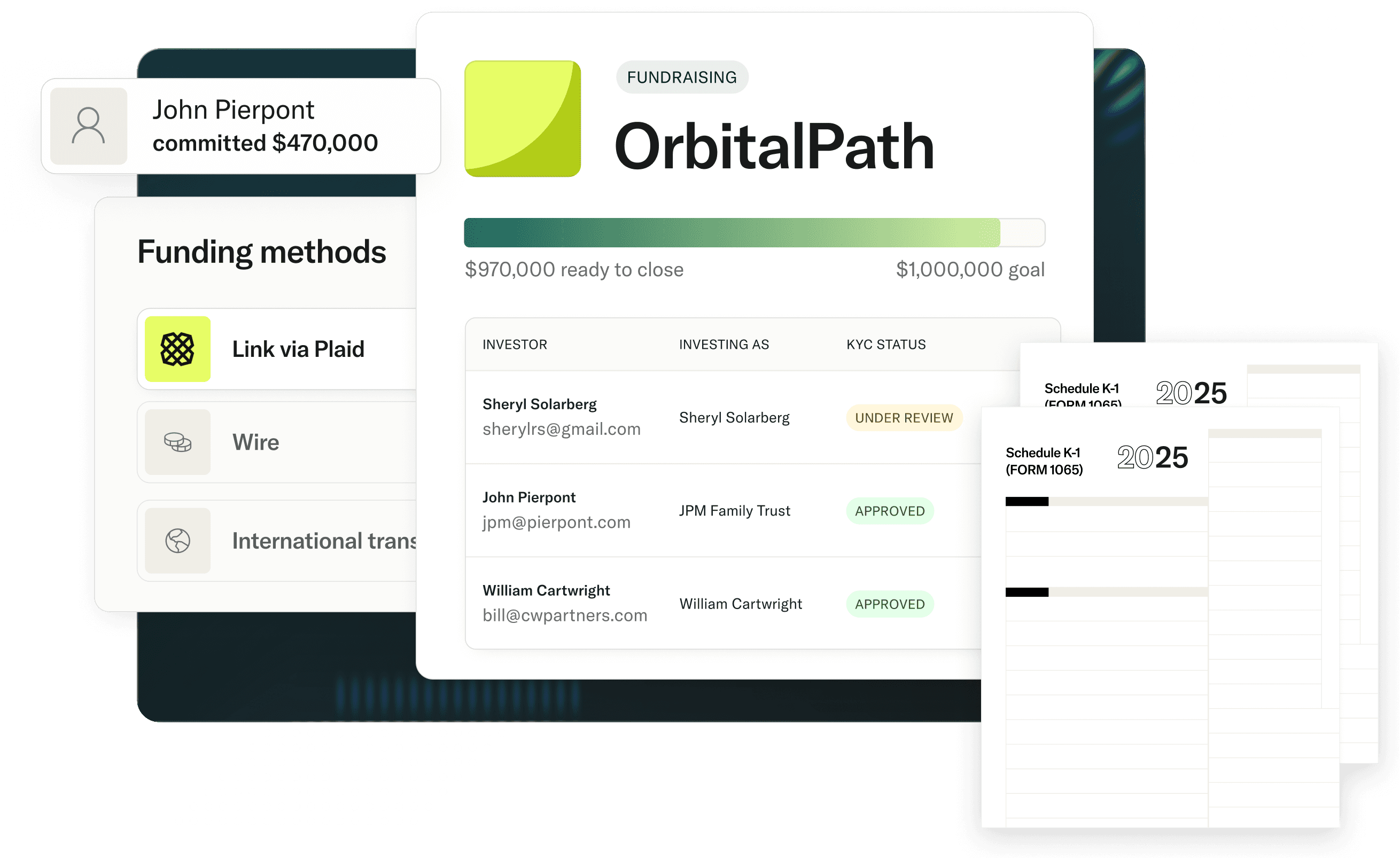
SPV administration covers the full lifecycle of a deal vehicle:
Entity formation and subscription agreements
Banking and capital account setup
Know your customer (KYC) and anti-money laundering (AML) checks
Investor accreditation verification
Form D and Blue Sky filings
Capital calls and distributions
K-1 (Schedule K-1) tax document preparation and delivery
Some platforms bundle everything into one workflow. Others require coordination across multiple vendors.
Why Your Platform Choice Matters
Your platform determines how fast you close, how confident your investors feel, and how much operational work falls on your team. A fragmented process introduces deal risk and erodes LP trust.
How to Evaluate an SPV Provider
Choosing an SPV administration platform requires evaluating three dimensions: speed, depth of compliance, and pricing clarity.
Speed and Execution
In competitive deal environments, hours matter. Evaluate how quickly a provider:
Forms entities and generates legal documents
Opens bank accounts
Onboards investors and collects signatures
Days of back-and-forth add friction when you can least afford it.
Compliance and Regulatory Coverage
Every SPV requires regulatory filings. Look for platforms that embed these automatically:
Blue Sky notices in states where investors reside
KYC and AML verification
If a provider requires you to coordinate filings yourself, you lose time that should go toward sourcing and closing deals.
Pricing Transparency
Pricing varies widely. Map total cost from formation through K-1 distribution before committing:
Some providers charge flat fees
Others take a percentage of capital raised
Watch for add-on charges for amendments, tax preparation, or platform carry
A transparent provider publishes all-in pricing upfront.
SPVs vs. Funds: When to use Each Investment Vehicle
An SPV pools capital for a single investment. A committed-capital fund collects capital upfront and deploys it across multiple investments over time.
When an SPV Is the Right Choice
Use an SPV when you want to offer investors a single, clearly defined investment opportunity. SPVs let you raise capital for each deal individually, which means you do not need to secure large upfront commitments before finding an asset. For emerging managers, SPVs offer a lower barrier to entry.
When a Fund Makes More Sense
Launching a fund offers obvious advantages: committed capital, predictable fees, and the ability to move on deals without waiting for LP wires. But it also requires significantly more trust from investors.
A fund might be the right choice if:
You already have LPs interested in a committed capital structure
You are consistently seeing high-quality deal flow and want to move quickly
You are seeking longer-term operational scale
Even then, many Fund I managers supplement their funds with SPVs or co-investments, especially for follow-on rounds or larger allocations.
Key Considerations When Choosing a Provider
Three additional factors separate adequate providers from those that support long-term growth.
Investor Experience and LP Confidence
Your investors interact with your provider's platform directly during onboarding, document signing, K-1 access, and reporting. The quality of that experience shapes how LPs perceive your operation and credibility.
Privacy and Relationship Ownership
Some platforms use investor data to market their own products or surface competing deals to your LPs. Before choosing a provider, confirm:
Whether the platform markets to your LP base
Whether deal access is restricted to individuals you invite
Who controls investor communications
Scalability and Growth Path
A platform that works for one SPV per year needs to work for ten. Evaluate whether the provider supports multiple simultaneous vehicles and whether reporting scales without manual effort.
Ready to See How Sydecar Delivers?
Sydecar handles SPV administration end-to-end, including entity formation, legal agreements, banking, KYC/KYB, AML, accreditation, Form D, Blue Sky filings, K-1s, and distributions on one platform. Launch vehicles in minutes with a 4-hour approval window. Pricing is 2% of capital raised ($4,500 minimum, $14,500 maximum per deal), no hidden fees, no platform carry. Sydecar does not market to your investors or offer competing deals. Sydecar earned a spot on the 2025 Inc. 5000 list.
FAQ
How Long Does It Take to Launch an SPV?
With a technology-driven platform like Sydecar, formation happens in minutes and approval within hours. The total timeline to a funded deal depends on investor onboarding and wiring speed, typically days.
What Compliance Filings Does an SPV Require?
An SPV typically requires a Form D with the SEC, Blue Sky filings in states where investors reside, KYC and AML verification, and accreditation checks. Some structures require additional state notices depending on the exemption. Sydecar handles all of this on behalf of its users.
Who Handles K-1 Preparation?
On a full-service platform like Sydecar, the provider prepares and distributes K-1 documents at no additional cost. Without one, SPV managers coordinate with external accounting firms, adding cost and delay.
How Do Platforms Protect Investor Privacy?
Policies vary. Some platforms aggregate investor data for marketing. Others, like Sydecar, restrict access so only the deal lead and invited investors see details. Ask whether a provider markets to your LP base or surfaces competing opportunities.
What Happens After an SPV Exit?
The provider calculates each investor's share of proceeds, distributes funds, prepares final tax documents, and winds down the entity without requiring separate coordination with lawyers or accountants.
Can I Run Multiple SPVs Simultaneously?
Yes. Many fund managers run several SPVs concurrently. The right platform manages all active vehicles from one dashboard with independent compliance tracking and reporting for each.