At a Glance
An SPV distribution returns investment proceeds to Limited Partners (LPs) after a liquidity event like an acquisition or Initial Public Offering (IPO).
Distributions take the form of cash or shares, each with different tax treatment.
A distribution waterfall determines how proceeds flow to investors, starting with return of capital.
Carried interest goes to the Special Purpose Vehicle (SPV) manager before remaining proceeds reach LPs.
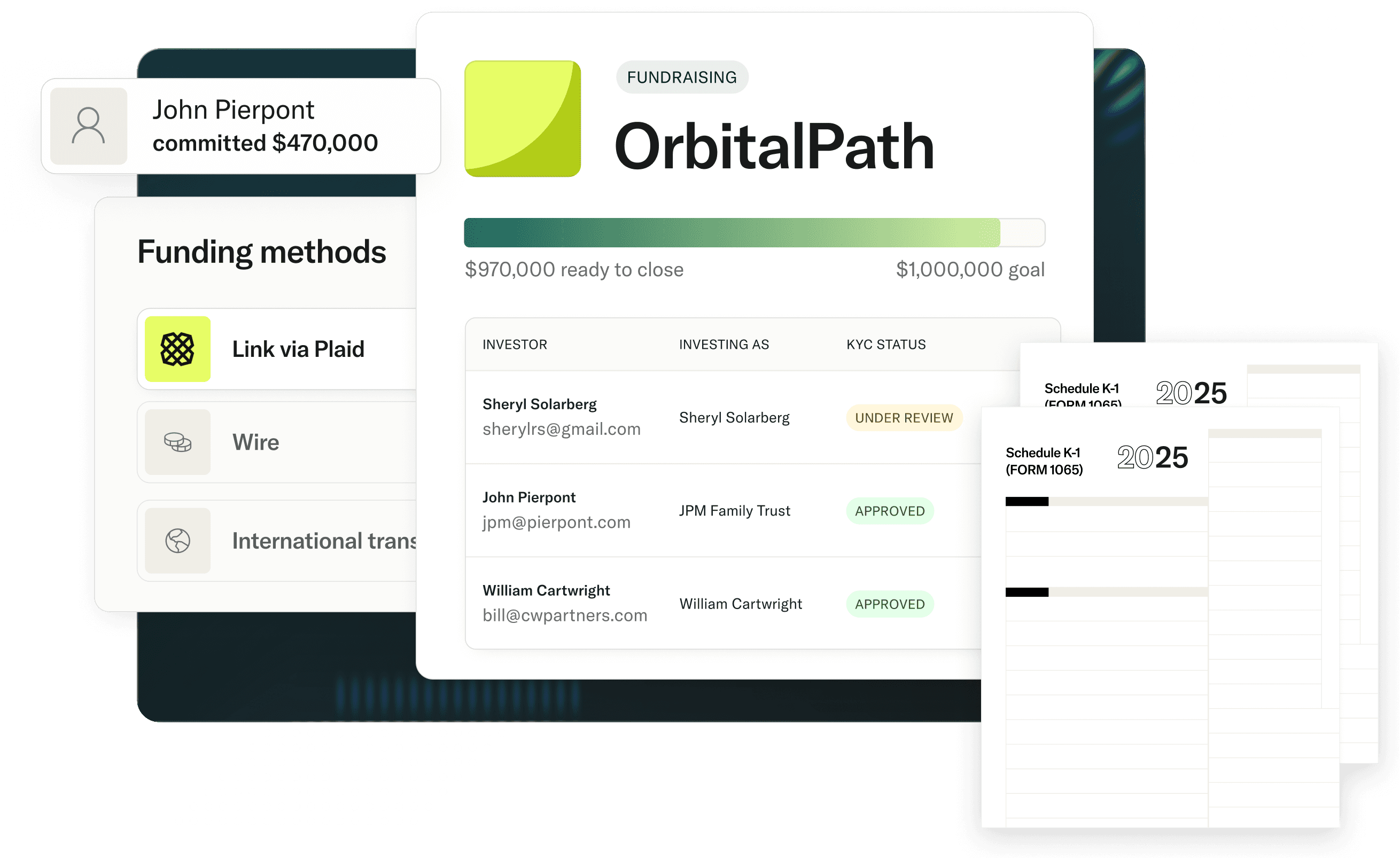
Every SPV must issue Schedule K-1 forms for annual tax reporting.
What Is an SPV Distribution?
An SPV distribution is the transfer of investment proceeds from a Special Purpose Vehicle back to its investors. The SPV manager calculates each investor's share and disburses the proceeds in accordance with the operating agreement.
When Do Distributions Happen?
Distributions occur after a liquidity event. Common triggers include an acquisition, IPO, secondary sale, or dividend payment. Some SPVs hold investments for years before a distribution. Others produce multiple distributions through partial exits.
Cash vs. Share Distributions
Cash distributions are the simplest type. The SPV receives cash from a sale, deducts fees and carry, and sends the balance to investors.
Share distributions (in-kind distributions) transfer stock directly to investors, typically after an IPO. Many managers find cash distributions easier to administer. Share distributions give investors control over when to sell.
How Are SPV Distributions Calculated?
Dividing proceeds follows a structured sequence called a distribution waterfall, which determines how much each investor receives.
The Distribution Waterfall
A distribution waterfall is the order in which proceeds flow to different parties. Most venture SPV waterfalls follow this sequence:
Return of capital: Investors receive their original investment first.
Preferred return (if applicable): Some SPVs include a hurdle rate before the manager collects carry. This is less common in venture.
Profit split: The remaining proceeds are divided between the SPV manager and investors in accordance with the carry terms.
Carried Interest and Management Fees
Carried interest ("carry") is the SPV manager's share of profits. The median carry on Sydecar is 15%, with the remaining 85% going to LPs.
For example, an SPV raises $500,000 and the investment returns $1.5 million. After returning $500,000 in capital, the $1 million profit splits: $150,000 (15%) to the manager and $850,000 (85%) to investors. Management fees are typically collected separately—either up front or annually—and do not reduce the carry calculation.
What Are the Tax Implications?
SPV distributions create tax obligations for managers and investors. Most venture SPVs are structured as Limited Liability Companies (LLCs), which are pass-through entities pass-through entities. The SPV does not pay taxes directly. Income and gains pass through to each investor's tax return.
K-1 Reporting
Every SPV must issue a Schedule K-1 to each investor annually, reporting their share of income, gains, losses, and deductions. In practice, timely K-1 delivery is critical for maintaining LP trust. Late K-1s force investors to file tax extensions.
How Distribution Type Affects Taxes
Cash distributions: Investors recognize capital gains in the year they receive cash. Long-term rates typically apply for investments held more than one year.
Share distributions: Investors do not owe taxes when they receive shares. They recognize gains only when they sell, giving them control over timing.
How Do SPV Distributions Compare to Fund Distributions?
SPV distributions and fund distributions differ in structure and timing. A venture fund pools capital across many investments and distributes proceeds over the fund's lifecycle. An SPV holds one investment and distributes all proceeds at once.
Timing: SPV distributions happen when a single investment exits. Fund distributions occur as various portfolio companies achieve liquidity.
Simplicity: SPV distributions involve one asset. Fund distributions require tracking carry, recycling, and clawbacks across a portfolio.
Visibility: SPV investors know exactly which company produced their return. Fund investors receive blended returns.
How Sydecar Simplifies SPV Distributions
Managing distributions manually means calculating allocations, processing carry, coordinating transfers, and generating tax documents. Each step risks errors.
Sydecar's SPV administration platform addresses these challenges:
Platform-managed distributions: Sydecar calculates carry and investor payouts based on each deal's terms, then routes the breakdown through Sydecar review and deal lead approval before proceeds go out.
Built-in K-1 generation: The platform generates and delivers K-1 forms at no additional cost, helping managers meet tax deadlines.
Investor portal: Investors access distribution details, tax documents, and investment history in one place.
Real-time cap table: Accurate cap tables ensure allocation calculations always use current, verified data.