At a Glance
A Special Purpose Vehicle (SPV) pools investor capital into a single-purpose legal entity for one investment.
SPV managers source a deal, form the entity, onboard investors, call capital, and wire funds to the target company.
SPVs offer deal-by-deal flexibility, lower overhead, and full transparency.
Many fund managers run SPVs alongside their fund for co-investments and opportunistic deals.
SPV administration platforms like Sydecar handle entity formation, compliance, tax filings, and investor management.
What Is an SPV?
An SPV is a legal entity that pools capital from multiple investors into a single investment. In venture capital, an SPV allows a manager to raise money from investors and deploy it into a specific startup.
Who Is Involved in an SPV?
SPV manager: The person who sources the deal, forms the entity, and manages the investment (the General Partner, or GP, equivalent).
Limited Partners (LPs), or investors: The individuals or entities who commit capital.
Target company: The startup receiving the pooled investment.
Administration platform: The technology provider handling entity formation, compliance, and tax filings.
How Does an SPV Work Step by Step?
Deal sourcing: The SPV manager identifies an opportunity and negotiates terms.
Entity formation: The manager creates a new legal entity, typically a Delaware Limited Liability Company (LLC).
Investor onboarding: Prospective investors are invited to the deal to review terms, complete compliance checks, and sign subscription agreements (contracts to invest).
Capital calls: The manager calls committed capital once commitments hit the target.
Investment: The SPV wires funds to the target company in exchange for equity (ownership shares).
Holding period: The SPV holds the investment until a liquidity event, such as an acquisition or initial public offering (IPO).
Distribution: At exit, the manager distributes proceeds to investors based on ownership percentage, after deducting carry (a share of profits) and fees.
How Is an SPV Different From a Venture Fund?
SPVs and venture funds both pool investor capital but differ in structure, commitment, and flexibility.
SPV | Venture Fund | |
|---|---|---|
Structure | Single asset, single entity | Multi-asset, blind pool |
Commitment | Deal by deal | Upfront across multiple deals |
Fees | One-time, typically passed to investors | Annual management fee plus carry |
Investor choice | Investors evaluate each deal | Investors trust the manager's discretion |
Timeline | Days to weeks | Months of fundraising |
When Managers Use Both
Many fund managers run SPVs alongside their fund for co-investment opportunities in a breakout company, to exercise pro-rata rights (the option to maintain ownership percentage in future rounds), or to pursue a deal outside the fund's thesis.
What Are the Benefits and Risks of Using an SPV?
Benefits:
Deal-by-deal flexibility: Managers raise capital for specific opportunities without a multi-year fund.
Lower overhead: SPVs require less infrastructure than a full fund.
Investor transparency: Each investor knows exactly which company their capital supports.
Faster execution: Managers form an SPV, onboard investors, and close in days with the right platform.
Risks:
Single-asset concentration: Investors bear the risk of one company rather than a diversified portfolio.
Administrative complexity: Each SPV requires its own entity, compliance filings, and tax documents, including Know Your Customer/Know Your Business (KYC/KYB) verification and accreditation checks.
How Sydecar Simplifies SPV Administration
Sydecar brings every back-office function into one SPV administration platform.
Instant entity formation: Launch a Delaware LLC in minutes and begin fundraising immediately.
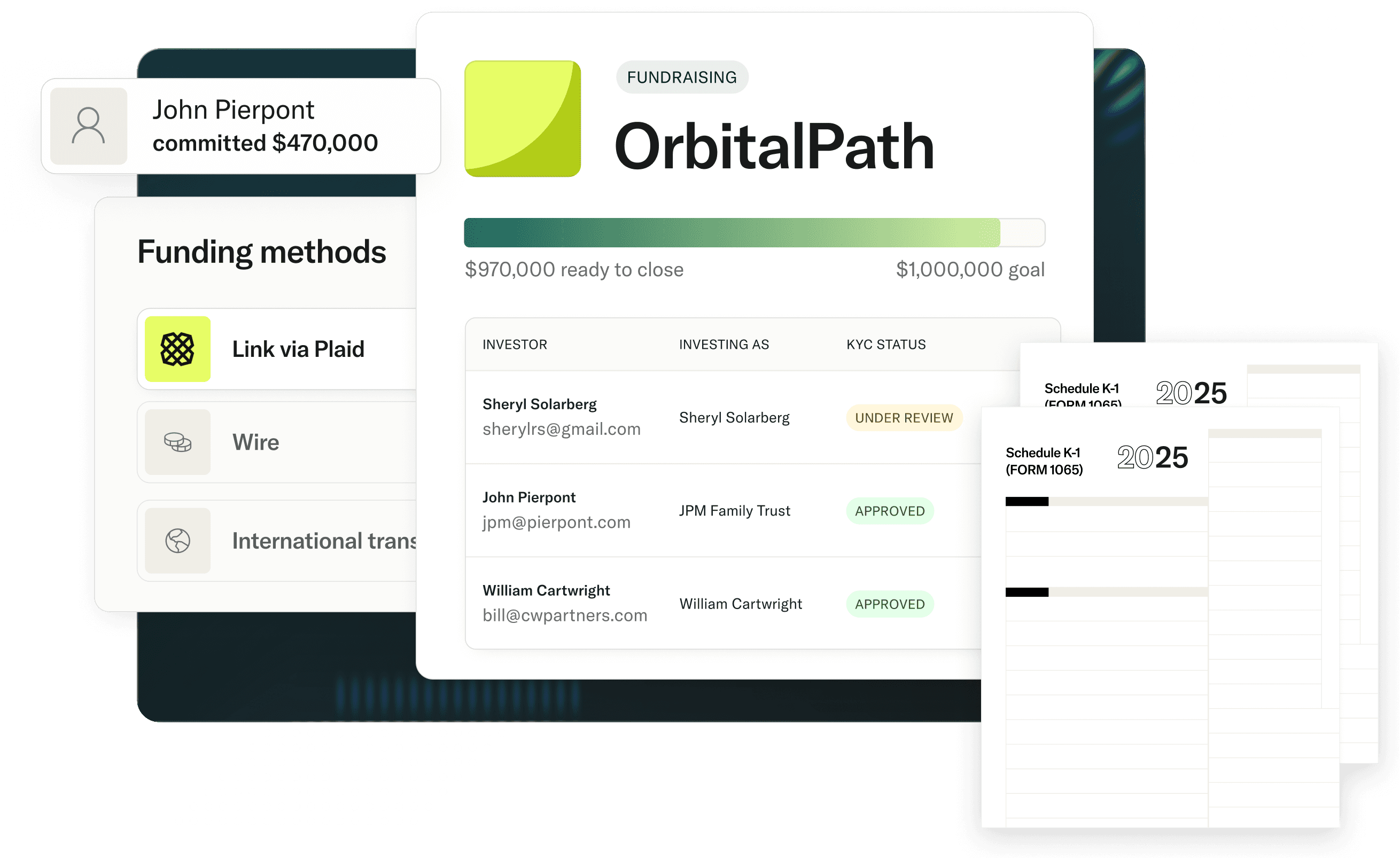
Digital investor onboarding: Investors review terms, sign documents, and wire funds through one digital experience.
Embedded compliance: The platform handles KYC/KYB, Anti-Money Laundering (AML) screening, accreditation, Form D (a Securities and Exchange Commission, or SEC, filing), and Blue Sky filings (state-level securities registrations).
Automated tax filings: Schedule K-1 generation and distribution happen automatically at no additional cost.
Transparent pricing: One-time fee with no hidden costs, no platform carry, and no renewal charges.