Emerging managers often choose between managing SPV investments personally or through a formal business entity. That choice affects liability, how LPs view you, taxes, and how easy it is to keep doing deals over time. Managing as an individual can work early on. As deal size and LP expectations grow, formal structures often become more important.
At a Glance
Managing deals as an individual is a fast way to get started, but it can increase personal liability and limit investor confidence as you scale.
Business entities (such as limited liability companies (LLCs)) and C-corporations (C-Corps) can enhance liability protection and signal a more professional setup.
Limited partners (LPs) often prefer entity structures, especially family offices and institutions.
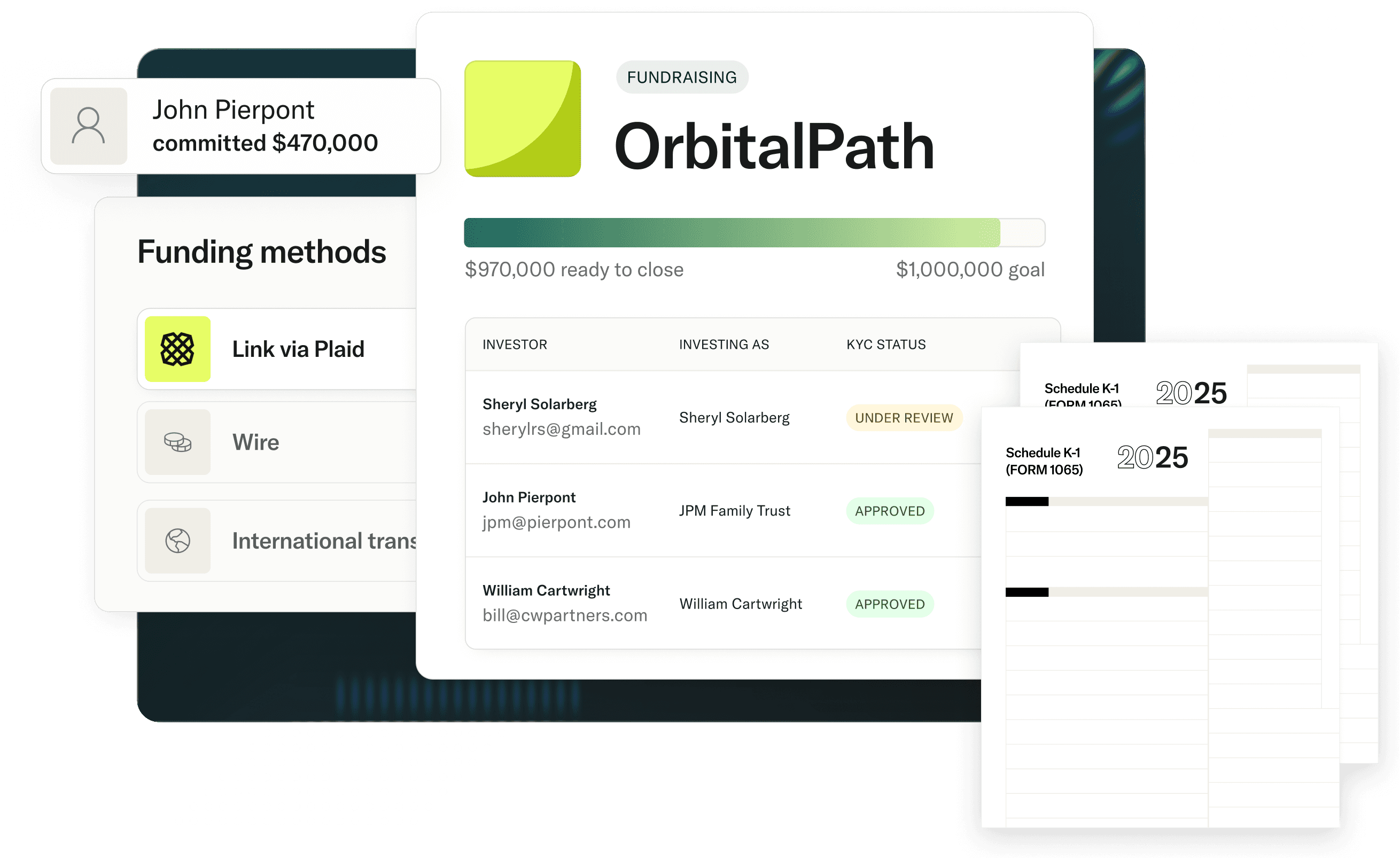
A special purpose vehicle (SPV) platform, such as Sydecar, can set up an SPV for each deal, reducing admin work while still providing a formal structure.
Many SPV leads move from “individual” to “entity” after a few deals, larger deal sizes, or when institutional LPs get involved.
Tax reporting and tax rules vary by structure and can matter a lot for certain LPs, including tax-exempt investors concerned about unrelated business taxable income (UBTI).
What Does It Mean to Manage Deals as an Individual?
Managing deals personally means you organize investments without forming a separate legal entity. You coordinate LPs, negotiate terms, and manage the SPV in your own name.
How Individual Deal Management Works
You create the SPV structure (often through a platform).
Liability is imposed on you as an individual.
LPs invest largely based on personal trust in you.
You avoid forming a separate business and the related ongoing compliance.
Immediate Advantages
Start quickly
No formation costs or registered agent fees
Less admin work
Simpler tax reporting on personal returns
Significant Risks
Personal assets can be exposed to claims
Sophisticated LPs may see the setup as less professional
Raising beyond close networks can get harder
Carry and fee setup can be less clear without a business entity
When Individual Deal Managment Makes Sense
Individual deal management can fit early-stage situations:
First 1–3 deals while testing your approach
Smaller deal sizes under $250K where LP expectations are more informal
Close relationships with investors who know you directly
Exploring before committing to steady deal flow
The Liability and Perception Problem
As deal size and LP count increase, two issues become more prevalent:
Liability exposure
Investment decisions, LP communications, and basic compliance can create personal risk. Disputes can affect personal assets when everything runs through you.
LP confidence
Many LPs view structure as a signal of how you operate. Family offices and institutional LPs often look for:
A formal entity with clear governance
Insurance coverage where appropriate
Separation between personal and business activity
A consistent process
What Are the Business Entity Options?
Three common structures can help deal leads formalize how they run deals.
Limited Liability Company (LLC)
An LLC can provide liability protection, flexible governance, and pass-through taxation (meaning the entity’s income generally “passes through” to the owners’ tax returns).
Formation basics:
File articles of organization in your state
Create an operating agreement
Obtain an employer identification number (EIN) and open business bank accounts
Maintain a registered agent and annual compliance
Tax treatment: Profits and losses generally pass through to your tax return. LPs typically receive Schedule K-1 (K-1) tax forms showing their share.
Best for: Deal leads running multiple SPVs per year who want a standing setup and are not focused on tax-exempt institutional LPs.
C-Corporation
C-Corps create a separate taxable entity with more formal governance.
When it makes sense: Less common for deal leads, but sometimes used when building a long-term management company with employees, significant assets under management (AUM), and an institutional LP base.
Tax disadvantage: Double taxation—corporate profits are taxed, and dividends are taxed again, often making this less cost-efficient for many deal leads.
Governance requirements:
Board of directors
Shareholder meetings
Formal record-keeping
Ongoing corporate formalities
SPVs: The Modern Deal Lead’s Structure
An SPV platform like Sydecar can set up a new entity for each deal, so you can use a formal structure without maintaining a permanent entity between deals.
How it works:
The platform forms an entity for each deal
You get liability separation and a more professional setup
You avoid maintaining an entity between deals
Compliance, banking, and tax reporting are typically included
Key advantage: A formal structure with less operational work. Each SPV is a separate legal entity, and the platform handles much of the setup and administration.
Best for: SPV leads who want to focus on sourcing and LP relationships instead of entity administration.
What Do LPs Care About?
Different LP types view business structures differently.
High-Net-Worth Individuals and Family Offices
These investors often prioritize:
Clear tax reporting: K-1s delivered on time
Professional presentation: Clear legal docs and organized processes
Trust and track record: Your deal selection and follow-through
Some high-net-worth LPs may be comfortable investing with an individual SPV lead, especially early on. A formal structure can still help signal consistency.
Institutional Investors and UBTI Concerns
Pension funds, endowments, and other tax-exempt investors often focus on unrelated business taxable income (UBTI).
The UBTI Problem
Tax-exempt institutions can owe tax on certain income from pass-through entities that generate UBTI.
Why this Matters
Pass-through structures (like LLCs and partnerships) can create:
Extra tax reporting work for institutional LPs
Possible tax liability for tax-exempt investors
Complexity that some institutions avoid
A Common Approach
Some deals use a C-Corp SPV, or another “blocker” structure to help reduce UBTI concerns for tax-exempt LPs.
How to Choose the Right Structure
The best fit usually depends on deal volume, LP mix, and how you expect to grow.
Decision Framework by Deal Volume and LP Type
Occasional deals with a personal network:
1–4 deals per year
LPs are friends, colleagues, or close professional contacts
Check sizes under $250K
Often used: Individual or SPV platform
Regular deal flow with mixed LPs:
5–10 deals per year
Mix of high-net-worth individuals and family offices
Check sizes $250K–$1M
Often used: LLC or SPV platform
Institutional LP targets:
Any deal volume
Targeting pension funds, endowments, or fund-of-funds
Check sizes $500K+
Often used: SPV platform with C-Corp structure, or a permanent C-Corp
When to Transition from Individual to Entity
Common signals that it may be time to formalize include:
Repeat LP base: The same LPs participate in multiple deals and expect a consistent setup.
Larger deals: As deals get bigger, LPs often expect a more formal structure and clearer liability separation.
Institutional LP interest: Institutions usually expect a formal structure.
Carry and management fees: Fees are often simpler to document and administer through an entity.
More deals per year: At 5+ deals per year, platforms and repeatable structures can reduce mistakes and admin load.
Conclusion
Leading deals as an individual can be a fast way to get started, but formal structure often matters more as you scale. The tradeoff is between speed and simplicity versus liability separation, credibility, and LP fit.
SPV platforms such as Sydecar make it easier to use an institutional-style structure without building permanent infrastructure or taking on ongoing compliance work between deals.
Ready to formalize your deal structure without the administrative burden? Book a demo to see how Sydecar can help you set up institutional-grade SPVs while you focus on sourcing deals and building LP relationships.