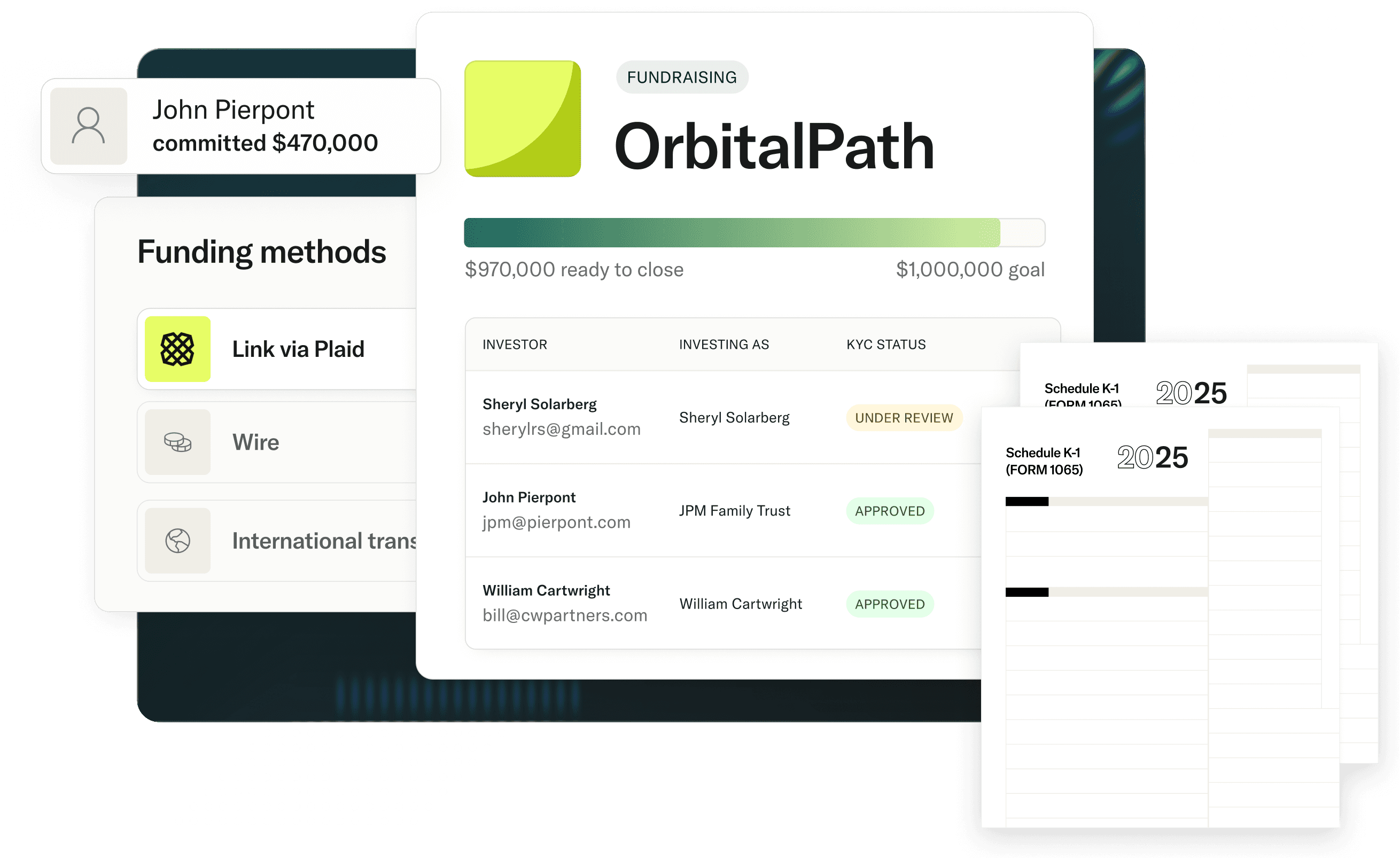
"Non-qualifying investments", such as special purpose vehicle (SPV)-into-SPV structures, investments into a fund, and secondary transactions, can help managers access oversubscribed deals and secondary positions. They can also bring added Securities and Exchange Commission (SEC) rules and more operational work. The $150M assets under management (AUM) threshold often determines whether SEC registration applies, while layered structures can delay the timing of Schedule K-1 (K-1) delivery and stack fees. These deals typically work best with early planning, experienced legal counsel, and platform support for complex transactions.
At a Glance
Non-qualifying investments (SPV-into-SPV, fund interests, secondaries) can trigger different SEC rules than direct company investments
The $150M AUM threshold can affect whether investment adviser registration applies and whether investors must meet qualified client standards
Layered SPV structures can add complexity, including delayed K-1s, stacked fees, and longer reporting timelines
Secondary transactions may require company consent, clear transfer rights, and careful pricing work
Working with experienced legal counsel during planning can help reduce regulatory and documentation risk
Introduction
Many SPVs invest directly into operating companies. But managers also use SPVs to access oversubscribed funds, buy secondary positions, or invest into other vehicles. These non-qualifying investments can add flexibility, but they can also change how SEC thresholds apply and how much administrative work the deal requires.
If your structure crosses certain lines, registration, investor qualification limits, and audit requirements may apply. This guide explains common non-qualifying structures, what tends to drive regulatory attention, and the operational tradeoffs to expect.
What Qualifies as a Non-Qualifying Investment?
The SEC generally treats direct stakes in operating companies as “qualifying investments,” and treats positions in other investment vehicles as “non-qualifying investments.”
Types of Non-Qualifying Investments
SPV-into-SPV structures: Your SPV invests into another SPV that holds the underlying company shares
Fund interests: Your SPV buys limited partner (LP) positions in existing venture funds
Secondary transactions: Your SPV buys shares from existing shareholders, instead of buying in a new funding round
The $150M AUM Threshold
The $150M AUM threshold is a key point for many managers. If your AUM goes above this level and includes non-qualifying investments, SEC investment adviser registration may apply.
Registration can bring requirements such as:
Limiting investors to qualified clients (often tied to higher wealth or income thresholds)
Annual audits
More compliance documentation, including Form ADV
How Do SPV-into-SPV Structures Work?
Layered SPV structures create a chain: SPV 1 (your vehicle) invests into SPV 2 (another manager’s vehicle), which holds the company shares. Managers use this to access deals where the other SPV is already set, or to buy a position from existing SPV investors.
Operational Realities of Layered Structures
Capital moves through multiple entities, each with its own documents, fees, and reporting. Common challenges include:
Extended K-1 timelines: SPV 2 often must finish tax filings before SPV 1 can issue K-1s, which can push delivery into late summer or fall
Fee layering: Management fees and carried interest (carry, meaning the manager’s share of profits) can apply at both layers, reducing net returns
Administrative coordination: Administrators must track ownership through multiple entities, which can add work and cost
Investment agreement clarity: Each layer needs clear terms for rights, obligations, and what information flows up to SPV 1
Many managers use layered structures for one-off opportunities because the workload increases with each additional layer.
Using SPVs for Secondary Transactions
Secondary SPVs buy existing shares from early shareholders (employees, angels, and early venture capital firms) rather than newly issued shares in a primary round. These deals often look different from primary investments in how transfers, pricing, and information work.
Key Considerations for Secondary SPVs
Transfer restrictions: Company agreements often include rights of first refusal (ROFR) or require board approval for transfers. These restrictions can affect timing and deal certainty.
Company consent: Even without a formal ROFR, companies often have an approval process for secondaries to manage their cap table (the list of who owns what).
Pricing dynamics: Secondary pricing is negotiated between the buyer and seller and can be above or below the last primary round, depending on liquidity needs and market conditions.
Information gaps: Secondary buyers often get less information than primary investors, depending on what the seller shares and what the company allows.
In secondary deals, SPV managers can represent many investors through a single vehicle, which can keep the cap table cleaner and simplify communication with the company.
What Regulatory and Operational Risks Should You Consider?
Non-qualifying investments can add risk beyond a standard SPV that invests directly into a company.
Regulatory Risks
SEC registration triggers: If non-qualifying investments and AUM levels cross certain thresholds, registration and related requirements may apply
Investor qualification limits: Registered advisers often need investors to meet qualified client standards
Enhanced compliance obligations: Annual audits, Form ADV filings, and ongoing reporting
Operational Risks
Administrative complexity: Multiple entities and layers can require more coordination to track ownership and reporting
Delayed tax reporting: Layered K-1 timelines can push tax documents later in the year, and some LPs may choose to file extensions
Platform limitations: Some SPV platforms do not support layered structures and complex secondaries due to compliance and operational complexity
Legal review needs: These structures often require more customized documents and careful regulatory analysis
Many managers track AUM closely and involve fund counsel early when considering these structures.
How Does Sydecar Support Complex SPV Structures?
Sydecar supports layered SPVs, secondary transactions, and other non-standard deal types.
Platform Capabilities
The platform provides:
Embedded compliance support: Know your customer (KYC) and anti-money laundering (AML) checks, accreditation verification, and regulatory filings
Transparent fee structures: Clear pricing with no hidden platform carry or renewal costs
Automated K-1 generation: Tax document preparation included at no additional cost
Institutional-grade infrastructure: A professional investor experience that can scale without adding headcount
Some complex structures may still call for additional legal review. Sydecar’s team can help identify when specialized counsel may be useful for a given transaction.
Frequently Asked Questions
Does investing through an SPV-into-SPV structure affect the returns for my investors?
Fees and carry at both SPV layers can reduce net returns. Many managers model the total fee impact and explain it clearly to LPs.
What happens if I cross the $150M AUM threshold unexpectedly?
Registration may be required, and the process can take time and require additional resources. Many managers discuss timing and options with counsel as they approach the threshold.
How long does K-1 delivery take for layered SPVs?
Layered structures may push K-1 delivery back by months compared to direct investments. Some investors may choose to file tax extensions if documents arrive late.
When should I consult legal counsel for non-qualifying investments?
Many managers involve counsel early, especially when they are near the $150M AUM threshold or working through secondary transfer restrictions.
Conclusion
Non-qualifying investments can help experienced managers access oversubscribed opportunities, secondary positions, and fund interests. They can also add regulatory sensitivity and operational workload, especially with layered SPVs.
Planning ahead helps managers match the structure to the opportunity and set expectations on timing, fees, and reporting.
Book a demo to discuss how Sydecar can support your SPV investing into non-qualifying investments.