At a Glance
Founders get venture capital funding by proving their startup can grow to venture scale, preparing clean legal and financial documents, pitching investors who back their stage and sector, and negotiating a term sheet through close.
Venture capital is equity financing: investors buy ownership in exchange for capital and expect returns through an acquisition or IPO.
The process runs in six steps: validate the business, prepare documents, find investors, pitch, complete diligence and the term sheet, and close.
On Sydecar, 70% of SPVs that invested in startups over the past 12 months went into pre-seed, seed, or Series A rounds.
Founders can also run their own founder-led SPV to bring angels and community investors into a round through one vehicle.
What Is Venture Capital and How Does It Work?
Venture capital is equity financing for private companies that can grow quickly to a large scale. Investors buy ownership, usually preferred stock, and earn returns when the company is acquired or goes public.
Most venture capital comes from funds. General partners (GPs) raise capital from limited partners (LPs) and invest it across a portfolio. Funds typically charge an annual management fee of about 2% of committed capital and take carried interest (a share of profits) of about 20%.
Some investors back a single company through an SPV. An SPV raises capital for one deal, and its manager sets fees and carry for that deal only.
How Does Venture Capital Compare With Other Funding Options?
Funding source | What the founder gives up | Repayment | Best fit |
|---|---|---|---|
Equity, usually in smaller amounts | None | Earliest stages, before institutional interest | |
Venture capital | Equity, often a board seat and investor rights | None | Companies targeting rapid growth to large scale |
Bank loans | No equity; often collateral or personal guarantees | Required regardless of performance | Companies with steady cash flow |
Bootstrapping | Nothing | None | Companies that can fund growth from revenue |
Venture capital provides more capital and investor support than the alternatives. Founders pay for it in ownership and in expectations for growth.
Is Venture Capital Right for Your Startup?
Venture capital fits companies that can return an investor's entire fund from one outcome. Investors look for three traits.
A large addressable market. The market must support a company worth hundreds of millions of dollars or more.
A scalable model. Revenue can grow much faster than costs.
A defensible advantage. Technology, network effects, or proprietary data make the company hard to copy.
Companies that grow steadily and profitably often do better with revenue, loans, or angel capital, and keep more ownership.
How Do You Raise Venture Capital?
Raising a venture round follows six steps, and each one builds on the last.
Validate the business. Show evidence of demand before approaching investors: paying customers, recurring revenue, letters of intent, or engagement data that points to product-market fit.
Build the team. Investors back people as much as products. A founding team with complementary skills and domain expertise lowers perceived risk.
Prepare your legal and financial foundation. Form a Delaware C corporation, keep a clean cap table, maintain financials an investor can review, and protect your intellectual property.
Find the right investors. Research firms and angels that invest at your stage, in your sector, and at your check size. Warm introductions from founders or investors in their network improve response rates.
Pitch. Your deck should cover:
The problem and your solution
Market size
Traction and key metrics
Business model and unit economics, the revenue and cost per customer
Your team
How much you are raising and how you will use it
Complete diligence, negotiate the term sheet, and close. Investors review financials, contracts, technology, and references. A term sheet sets the valuation, board composition, and investor rights. Negotiate with counsel, then sign closing documents and receive the wire.
How Much Do Startups Raise at Each Stage?
Median round sizes roughly double or triple from one stage to the next, and SPVs participate at every stage. Seed is the single most common round for SPVs on Sydecar.
Stage | Median SPV raise on Sydecar |
|---|---|
Pre-seed | $109,000 |
Seed | $178,000 |
Series A | $473,000 |
Series B | $714,000 |
Series C | $1.44M |
Series D | $4.04M |
The remaining 13% of Sydecar SPVs invested in bridge rounds, later stages, or unspecified rounds. The median seed-stage SPV brought eight investors into the round as one line on the cap table.
Source: Sydecar platform data.
How Do SPVs Show Up in a Venture Round?
An SPV pools several investors into one entity, so the founder adds one shareholder to the cap table instead of many. SPVs reach a round in two ways.
Investor-led SPVs. An angel, venture manager, or existing investor forms an SPV to bring co-investors into your round. This is common for co-investments alongside a lead fund and for co-syndication between managers.
Founder-led SPVs. A founder forms an SPV to bring angels, customers, or community investors into a round through one vehicle.
What Should Founders Ask When an SPV Joins Their Round?
Who manages the SPV, and who will sign consents on its behalf?
Which platform administers it, and who handles K-1s and investor communications?
Are all investors in the SPV accredited?
What information rights does the SPV expect?
How Does Sydecar Support SPVs for Founders?
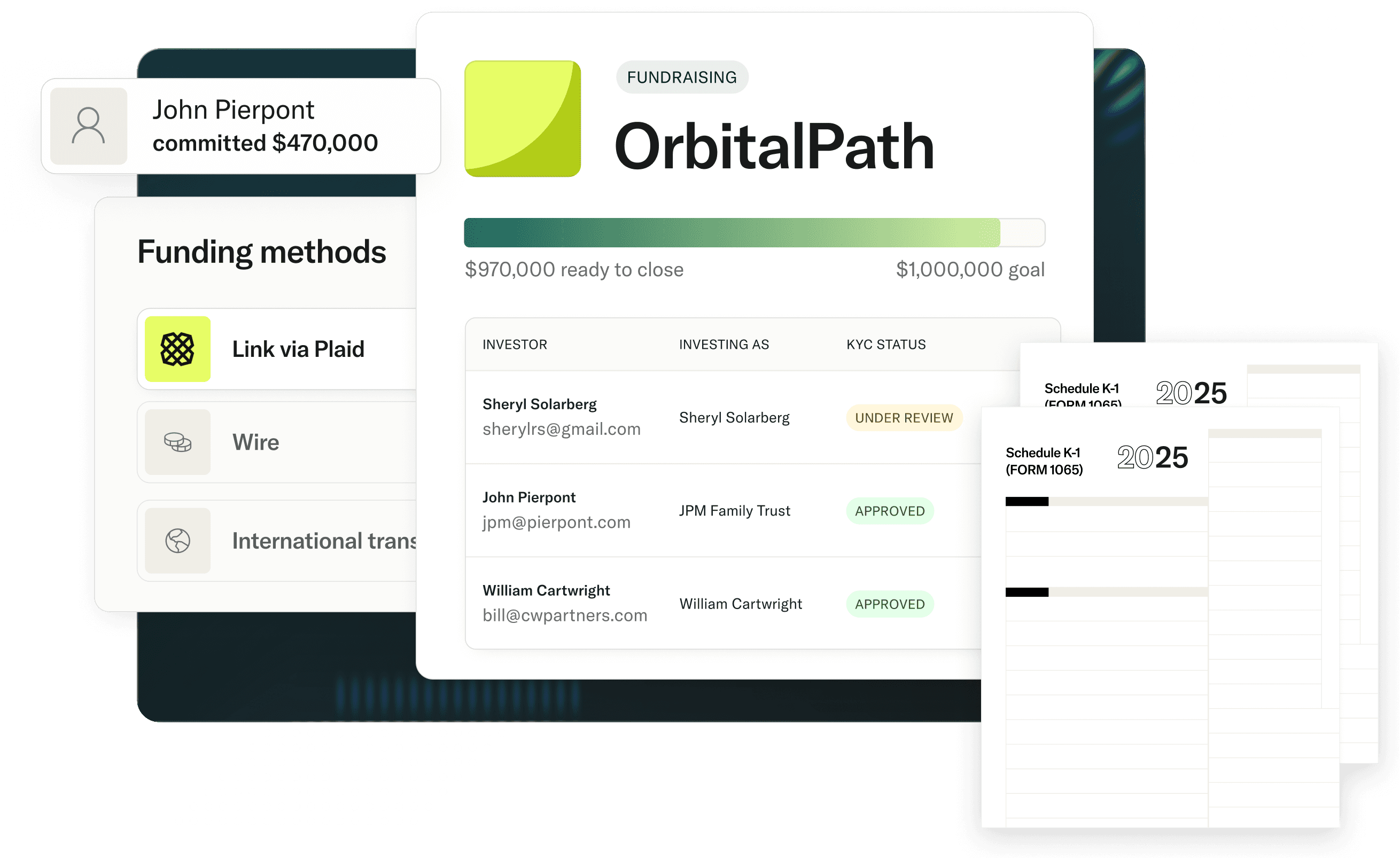
Sydecar is an SPV administration platform built exclusively for SPVs. Sydecar handles SPV formation and ongoing administration in-house, including banking, KYC and AML checks, Form D and Blue Sky filings, and K-1s. The platform supports founder-led SPVs, multiple closes, secondaries, side letters, and investor-specific fee structures.
Sydecar reviews SPV submissions within four hours, and every support interaction goes to a person who knows your deal. Pricing is one-time and published upfront, with no recurring annual fees. Sydecar runs no deal marketplace and never markets to the investors in your SPV.
Frequently Asked Questions
How Hard Is It to Get Venture Capital Funding?
Venture funding is highly competitive, and most firms invest in a small fraction of the companies that pitch them. Warm introductions, strong traction, and a large market improve your odds.
What Is the Difference Between a SAFE and a Priced Round?
A SAFE gives investors the right to future equity and converts at the next priced round. A priced round sets the valuation and issues preferred stock at close.
Should I Accept an SPV on My Cap Table?
An SPV adds one shareholder instead of many, which simplifies consents and cap table management. Ask who manages the SPV, who administers it, and what rights it expects before you accept.
What Is a Founder SPV?
A founder SPV is a vehicle a founder forms to bring angels, customers, or community investors into a round as a single investor on the cap table.
What Is the Difference Between an SPV and a Venture Fund?
A venture fund invests committed capital across many companies over several years. An SPV raises capital for one company. Many managers use both.
Does QSBS Apply to Venture-Backed Startups?
Qualified Small Business Stock (QSBS) can exclude certain gains from federal tax for investors in qualifying C corporations. Founders and investors should confirm eligibility with a tax advisor.