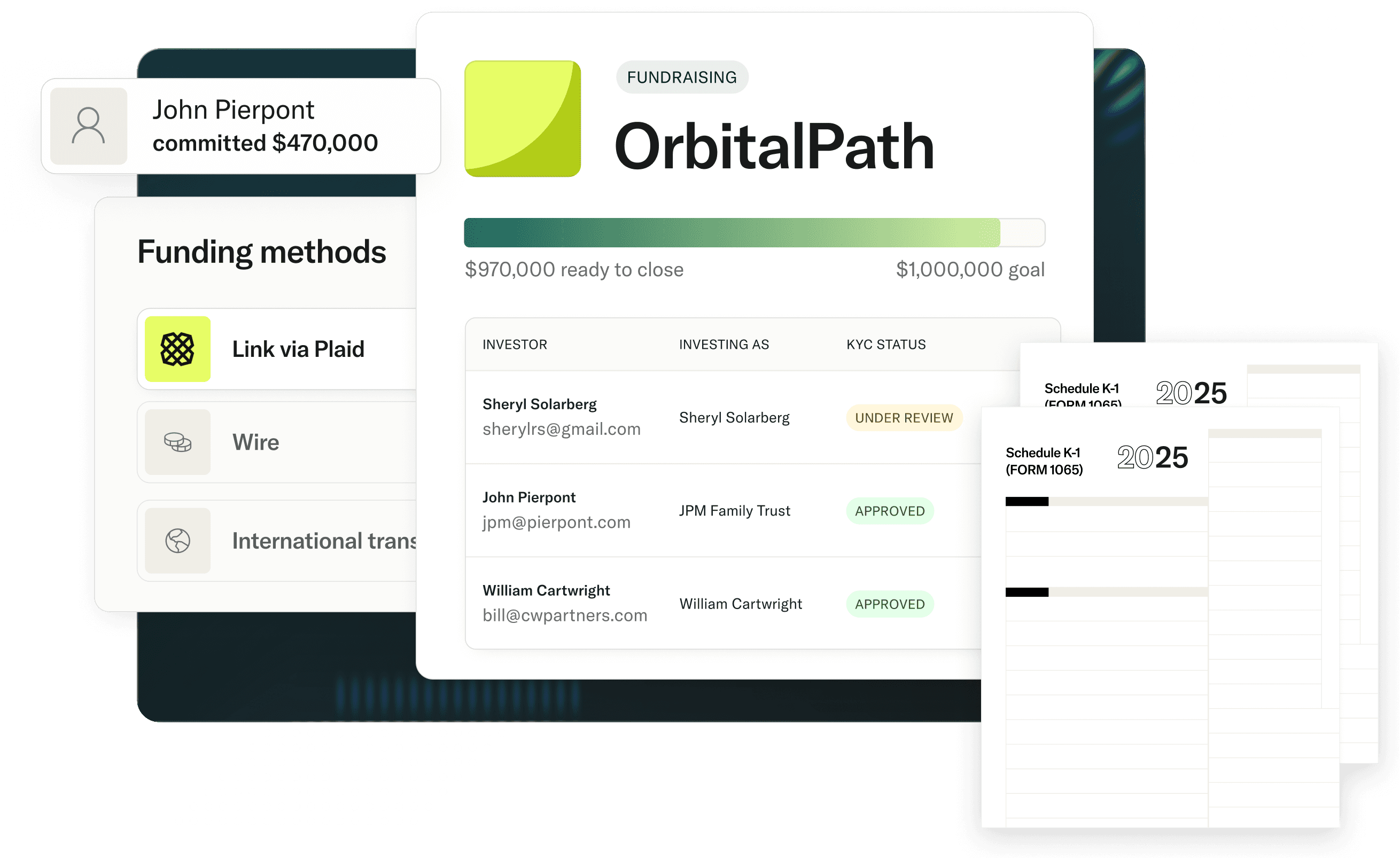
Timing your special purpose vehicle (SPV) launch protects your reputation with limited partners (LPs) and improves your odds of getting the allocation you want. It usually works best to launch after you’ve confirmed your allocation, seen strong investor interest (around 70%+ in soft commitments), understand the deal timeline, and have the operational setup to run the process cleanly.
At a Glance
Secure allocation first: Avoid launching an SPV before you’ve confirmed your allocation in the deal.
Validate investor interest: Aim for soft commitments covering 70%+ of your target raise before moving forward.
Understand the timeline: Know the startup’s round schedule so you can line up your SPV close date.
Choose the right vehicle: SPVs fit single deals; funds fit managers with steady deal flow.
Move quickly when ready: Modern platforms can help you launch an SPV in days.
Introduction
Knowing when to launch an SPV is often harder than understanding what one is.
Timing matters. Launch too early, and you may look unprepared to LPs or spend time on a deal that doesn’t happen. Wait too long, and you may miss the window to invest.
This guide lays out simple signals that suggest you’re ready, warning signs that suggest you should wait, and ways to move fast without cutting corners.
5 Signals You're Ready to Launch an SPV
These indicators help you decide whether it’s the right time to proceed.
1. You Have a Confirmed Allocation
A confirmed allocation is the starting point. Without it, launching an SPV is early and can hurt trust with LPs.
Allocation means the founder or round lead has clearly reserved space for you. You’ll typically want written confirmation of your allocation size and key terms.
2. Your Investor Base Shows Strong Interest
Strong interest means real intent to invest, not casual interest.
In practice, this looks like:
Soft commitments covering 70% or more of your target raise
LPs who joined your prior SPVs asking to participate again
Clear investor messages asking to be included in the deal
If you’re still testing interest or building your LP base from scratch, it may be worth waiting.
3. The Deal Timeline Is Clear
Knowing the round timeline helps you plan your SPV launch and close dates.
You’ll want to know:
When the company expects to close the round
Wire deadlines (the last date funds must be sent)
Any milestones that could shift timing
This reduces last-minute rush and missed deadlines.
4. You've Confirmed an SPV Is the Right Structure
SPVs are built for single-company investments. If you expect to do several deals over the next 12 months, you can use multiple SPVs or consider whether a fund may be a better fit.
If your LPs like choosing each deal, SPVs are a good fit. They can review the opportunity, decide whether to participate, and commit only to the companies they want. But if your LPs prefer committing capital once and letting you choose where to deploy it, a fund might be a better fit. Funds give you discretion to move quickly across multiple deals without going back to LPs each time.
5. You Have Operational Readiness
Operational readiness means you can handle entity setup, compliance, banking, and investor onboarding—or you have a platform that handles those steps.
Without the basics in place, even a strong deal can become hard to run smoothly.
When to Wait: Red Flags That Suggest You're Not Ready
Not every situation calls for an SPV. Knowing when to wait can protect your time and credibility.
Critical Warning Signs
No confirmed allocation: If you’re still working toward access, it’s often better to focus on that before involving LPs.
Insufficient investor interest: Launching below 50% soft commitments increases the risk you can’t close. It can also lead to a smaller raise than LPs expected.
Unclear deal terms: If valuation, rights, or structure are still changing, waiting can help. LPs generally need stable terms to decide.
Recurring deal flow: If you’re doing 8+ deals per year, a fund can be a better experience than running repeated SPVs.
How to Launch an SPV Quickly (Without Sacrificing Quality)
Speed matters in competitive rounds. If you’re ready, moving quickly can help you secure allocation.
The Typical Timeline: From Decision to Deployment
Traditional SPV formation timeline (can take weeks):
Work with legal counsel to form the entity
Set up banking
Handle investor onboarding over email and DocuSign
Complete compliance filings as separate steps
Modern platform timeline (as quickly as a few hours):
Automated entity formation
Integrated banking setup
Digital investor onboarding
Automated compliance processing
Modern platforms can shorten timelines by combining formation, banking, compliance, and onboarding in one workflow.
What Sydecar Handles for You
Sydecar reduces operational work at each step:
Instant entity formation: Launch your SPV and start fundraising quickly
Integrated banking: Avoid coordinating separate banking relationships
Digital investor onboarding: LPs sign documents and wire funds in one portal
Automated compliance: Know Your Customer/Anti-Money Laundering (KYC/AML), accreditation verification, Form D, and Blue Sky filings handled behind the scenes
Tax preparation: Schedule K-1 (K-1) tax forms generated at no additional cost
This setup helps you spend more time on the deal and LP relationships, and less time on admin work.
Frequently Asked Questions
How much investor interest do I need before launching an SPV?
Aim for soft commitments covering at least 70% of your target raise. This gives you more confidence that you can close and leaves room for drop-off.
Can I launch an SPV without a confirmed allocation?
In most cases, it’s better to wait. Launching before allocation is confirmed can hurt trust with LPs and waste time if you can’t access the deal.
How long does it take to launch an SPV?
With a platform like Sydecar, you can launch in hours. Manual processes through traditional providers can take multiple weeks.
What happens if the deal falls through after I launch the SPV?
If the deal doesn’t close, capital is returned to LPs. With Sydecar, platform fees are charged at deal close, so there’s no platform fee if the investment doesn’t happen.
Conclusion
Launching an SPV comes down to a few basics: confirmed allocation, strong investor interest, a clear timeline, the right structure, and the ability to run the process cleanly.
With modern platforms like Sydecar, you can move faster without adding operational burden. That helps you stay responsive in competitive rounds while keeping the LP experience professional.