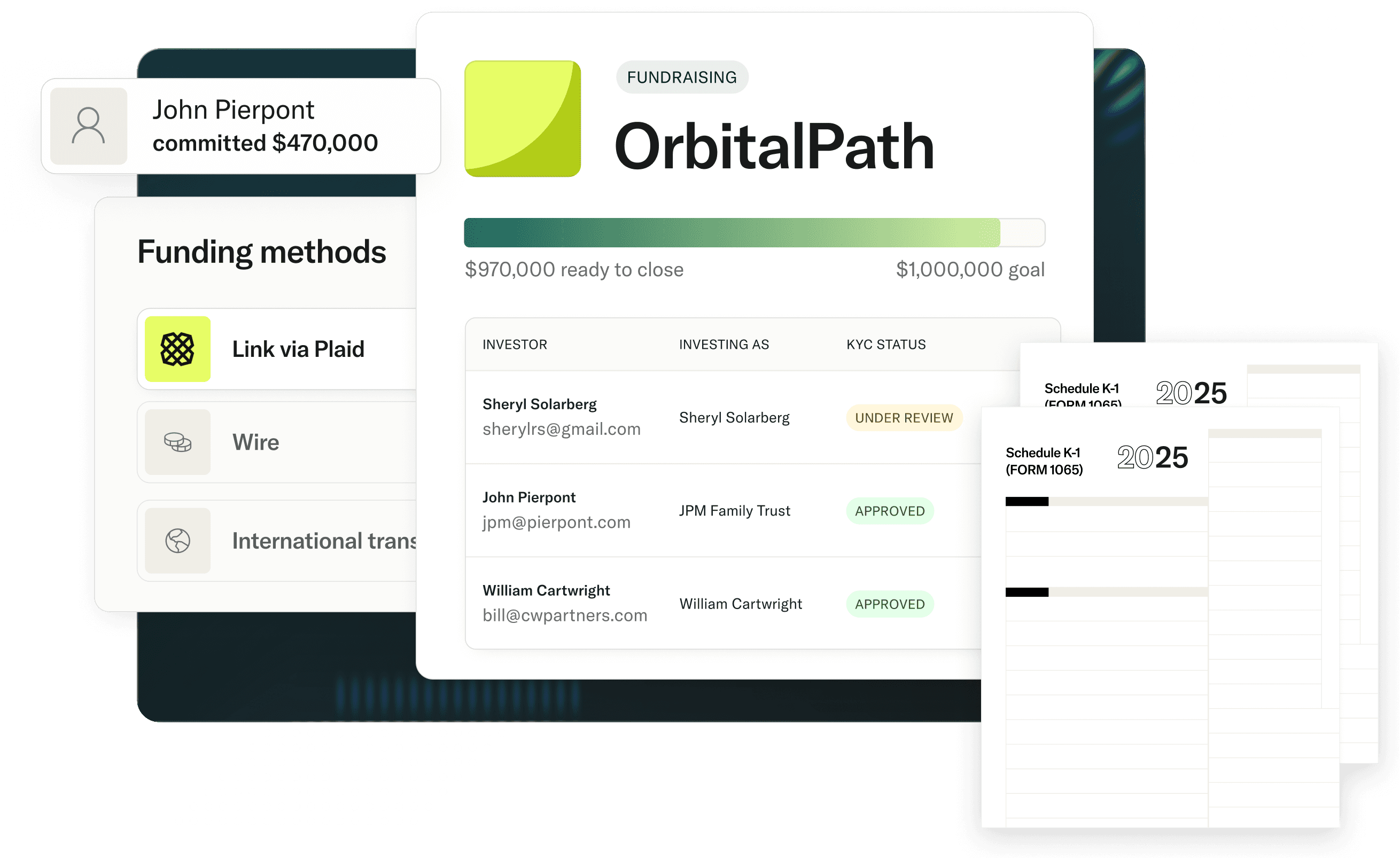
A special purpose vehicle (SPV) is a standalone legal entity that pools funds from multiple investors for a single startup investment. Software platforms like Sydecar have turned SPVs from a slow, complex process into a faster tool that emerging managers use to build a track record, do one-off deals, and strengthen limited partner (LP) relationships without raising a traditional fund.
At a Glance
An SPV is a standalone legal entity created to pool capital from multiple investors for a single startup investment.
SPVs combine multiple investors into a single line on a startup’s capitalization table (cap table), reducing administrative work for founders.
Emerging managers use SPVs to build track records, do opportunistic deals, and strengthen LP relationships before raising a full fund.
Platforms can streamline SPV formation from weeks to hours, with transparent pricing and automated compliance steps.
SPVs can provide LPs with targeted exposure at lower minimums than a traditional fund commitment.
How SPVs Work in Venture Capital
An SPV is usually set up as a Limited Liability Company (LLC) or Limited Partnership (LP). Investors join by contributing money to the vehicle. The SPV then makes one investment into the target company.
From the startup’s perspective, the SPV appears as a single line on the cap table, regardless of how many investors are in it. This can reduce admin work for founders and gives the lead investor a simple way to bring multiple backers into a deal.
If the startup later has an exit (such as an acquisition) or another distribution, the SPV receives the proceeds and pays them out to investors in accordance with the SPV’s terms.
The Role of the SPV Lead
The SPV lead (often called the general partner, or GP) manages the SPV. Common responsibilities include:
Secure allocation in the startup
Structure the vehicle and prepare governing documents
Onboard investors and verify accreditation status
Represent SPV investors in dealings with the company
Handle administration, including compliance, reporting, and distributions
Make final investment decisions for the vehicle
How SPVs Differ from Traditional Funds
SPVs:
Make one investment in one company
Have a lifecycle tied to that single investment
Can form and deploy capital in days or weeks
Provide concentrated exposure to one opportunity
Traditional Venture Funds:
Invest across many companies over several years
Provide diversification across a portfolio
Often run for 10+ years
Require ongoing work across the portfolio
Why Emerging Investors Use SPVs
SPVs can be useful for syndicate leads and emerging managers who want to:
Build a track record: Show sourcing ability, decision-making, and the ability to run a deal before raising a fund.
Execute opportunistic deals: Invest in a deal that does not fit a main fund’s focus.
Offer co-investment rights: Give key LPs extra access to high-conviction deals, which can strengthen relationships.
Move quickly: Form and fund an SPV faster than raising a fund.
Test investment strategies: Validate a thesis or sector focus before a full fund launch.
Maintain flexibility: Invest without fund rules around pacing, strategy, or portfolio construction.
Benefits for LPs
LPs can benefit from SPVs by getting:
Targeted exposure: Invest in a specific company without committing to a multi-year fund.
Lower minimums: Many SPVs set minimums around $10,000–$50,000.
Selective participation: Choose deals that match personal goals and risk tolerance.
Transparent economics: See where money goes and what terms apply.
Benefits for Founders
Founders often like SPVs because they can:
Consolidate multiple investors into a single cap table entry
Reduce investor admin and communications
Simplify governance with one representative for SPV investors
Keep the cap table cleaner for future rounds
How to Set Up an SPV
Many platforms have made SPV formation more straightforward:
Secure allocation: Confirm the allocation, terms, investment amount, and timeline with the startup.
Structure the vehicle: Choose an LLC or LP structure based on the investor base and needs.
Prepare governing documents: Create agreements that cover terms, governance, and investor rights.
Form the entity: File formation documents with the state (often Delaware).
Onboard investors: Collect investor info, confirm accreditation status, and run know your customer and anti-money laundering (KYC/AML) checks.
Execute the investment: Collect funds, send them to the startup, and receive the agreed security (for example, equity or a convertible note, which can convert into equity later).
Maintain compliance: Make required filings and provide reporting to investors.
Sydecar automates these steps, including compliance workflows, banking, and document generation.
Costs and Economics
Platform Fees:
Sydecar charges a one-time fee of 2% of capital raised
Minimum fee: $4,500 per deal
Maximum fee: $12,500 per deal
No hidden fees or platform carry (carried interest)
Lead Investor Compensation:
Carried interest (carry): Commonly 20% of profits after investors get their money back
Management fees: Often 0–2% annually to cover administration
Deal-by-deal or blended carry structures available
Additional Costs:
State filing fees (often $200–$500)
Optional legal review for complex structures
Benefits and Drawbacks of SPVs
Benefits
Risk Isolation: Each SPV is a separate legal entity, so liability and outcomes are isolated from other investments.
Flexibility: Form SPVs for specific opportunities without a long-term fund commitment.
Lower Formation Costs: SPVs are often less costly to set up than a traditional fund, with less legal and compliance work.
Speed: Launch faster than a traditional law-firm-led process, which is helpful in competitive deal timelines.
Challenges
Lack of Diversification: Investors are concentrated in one company, so one company can drive most outcomes.
Compliance Requirements: Accreditation checks typically apply for each SPV, and regulatory filings may be required, such as Form D (a U.S. Securities and Exchange Commission (SEC) notice filing) and state "blue sky" filings (state-level notice filings).
Administrative Overhead: Multiple SPVs can create more work, with separate banking, accounting, and tax reporting for each vehicle.
Economic Inefficiency at Scale: Costs and time can add up across many vehicles, and a fund can be more efficient for teams doing 5+ deals per year.
Platforms can reduce overhead through automation, built-in compliance, and dashboards to manage multiple vehicles.
When to Choose an SPV Over a Fund
SPVs Work Best For:
Single opportunistic deals when you have allocation but no fund vehicle
Testing an investment thesis before committing to a full fund strategy
Building toward a fund launch by showing deal execution and LP relationship management
Co-investment opportunities alongside an existing fund for key LPs
Early-stage managers making 1–4 deals per year while building a track record
Consider a Fund When:
You plan to make 5+ investments per year with a consistent strategy
You have LP relationships ready for multi-year commitments
You want diversification across a portfolio
You want fund economics like management fees and recycling provisions (reusing returned capital for new investments)
You are ready for more formal governance and operations
Frequently Asked Questions
What does SPV stand for?
SPV stands for Special Purpose Vehicle. In venture capital, it is a legal entity created to make one investment in a startup.
How long does it take to set up an SPV?
With platforms, SPVs can often be formed in hours. A traditional process through a law firm may take several weeks.
Can I use an SPV for multiple investments?
No. Each SPV is designed for one investment in one company. Multiple investments usually require separate SPVs or a traditional fund.
What is the minimum investment for an SPV?
Minimums vary by deal. Many SPVs set minimums between $10,000 and $50,000. Sydecar's minimum is $4,500.
Do SPVs require audits?
Many SPVs do not get audited unless a rule, investor requirement, or size threshold triggers it. For any specific SPV, it can help to confirm requirements with qualified advisors.
How are SPV returns taxed?
SPVs are usually pass-through entities, meaning taxes are reported at the investor level. Investors typically receive a Schedule K-1 (K-1) showing their share of results for tax reporting.
Can non-accredited investors participate in SPVs?
Often, no. Many SPVs rely on exemptions that require accredited investors.
What happens to an SPV after the startup exits?
The SPV distributes proceeds to investors based on its agreement, then typically dissolves after obligations are settled.
How many investors can participate in a single SPV?
Many SPVs are structured for 10–99 investors. In some cases, 100+ investors can trigger added requirements.
What states are best for SPV formation?
Delaware and Wyoming are common choices due to business laws and streamlined formation.
Conclusion
SPVs help emerging venture investors execute focused deals with manageable complexity. They can be a path to building a track record, strengthening LP relationships, and testing strategies before raising a committed-capital fund.
Platforms have made SPVs faster and more accessible by automating formation and ongoing administration.
Book a Demo to see how Sydecar simplifies SPV formation, compliance, and administration so you can focus on deals, not paperwork.